Posts

By Dan Gephart, February 11, 2020FELTG Instructor Dr. Anthony Marchese

The third page of the Partnership for Public Service report released last week explicitly hinged the federal workforce’s future success on agencies’ ability to do four things:

  • Collaborate internally.
  • Work closely together with other agencies.
  • Engage the public.
  • Establish connections with stakeholders from outside government.

Unfortunately, as the Partnership’s report makes clear, those are not four areas where the federal government has a particularly strong track record.

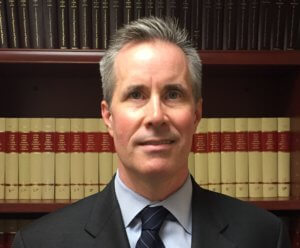
“That’s a tall order,” said Dr. Anthony Marchese (pictured above), the author of DESIGN: An Owner’s Manual for Learning, Living, and Leading with Purpose, as he read through the report’s four recommendations.

Dr. Marchese teaches FELTG’s Leadership Training Courses. That includes the course Connecting, Collaborating, and Creating: Mastering the Art of Meaningful Relationships, which, in light of the Partnership’s report, should probably be mandatory training for all supervisors and managers. [Note: All of FELTG’s Leadership Training Courses align with the Office of Personnel Management’s Executive Core Qualifications.]

“The biggest barrier to collaboration is the absence of trust,” Marchese said. “Healthy collaboration occurs when people work together with others to achieve a common purpose or shared goal. If trust is compromised, communication/information will be limited, people will possess a level of competitive antagonism toward others across the agency which results in battles over who receives credit for successes, fighting over scarce resources, inactive listening, and the reinforcement of existing organizational silos. Leaders who focus first on how to build trust (interpersonal – among employees and supervisors and interdepartmental – across the agency) will drastically increase the likelihood of collaboration.”

If collaboration is the largest boulder holding us back, then communication is the large boulder the size of a small boulder. It’s particularly challenging for supervisors.

“A recent Harvard study revealed that two-thirds of managers are uncomfortable talking with their staff,” Marchese said. “The discomfort wasn’t over having difficult conversations, leading performance reviews, or convincing an employee to stay. Managers simply reported being uncomfortable communicating in general.”

DG: Is that why so many federal supervisors struggle to hold their poor performers accountable?

AM: Both the federal and private sectors often promote great technical experts to supervisory roles without demonstrating key behaviors that are necessary for success. Leading conversations with employees is one of the most important activities of the supervisor. Even those of us with many years of experience may feel uncomfortable having a conversation with a poor performer. But, with thoughtful preparation, there is much that can be done to increase the likelihood of a positive outcome. Two things come to mind.

First, structured conversations lead to better conversations. The second thing is that as supervisors, we need to better understand how people can change behavior or grow their expertise. It is a lot easier to tell someone, “Change X – or else” versus helping to set this poor performer up for success by understanding and using the tools of the “Performance Paradigm.” People learn differently, people are motivated differently, people require different types of reinforcement and accountability.

DG: The country is divided these days, and that divisiveness often causes problems in the workplace. What advice would you give to someone who is leading people with wildly divergent opinions and beliefs?

AM: If I had a choice between a team of like-minded members versus one filled with vastly different types of individuals, I would choose the diverse team every time. A team with “wildly divergent opinions and beliefs” requires more time and patience to lead but with a thoughtful strategy, the outcomes can be incredibly impressive. Think about a team meeting in which the leader has charged the team with the task of solving a complex problem. The team with like-minded members will frame the challenge as well as the course of action quite similarly. The meeting will produce a predictable outcome.

On the other hand, a diverse team will probably have a spirited discussion with multiple perspectives, some healthy debate, and quite possibly, reach a remarkable outcome. Leaders who find themselves leading a diverse team should seek agreement on core outcomes/results, what we call “The What,” also the easiest part. Then create a member-centric strategy that focuses on “The How.” This is where most teams fail. Consider the following:

  • Openly discuss and celebrate team differences and explore implications for synergy and conflict.
  • Create “rules of engagement” for working with different members (behavioral styles, strengths, personalities).
  • Build Safety: Encourage members to speak up, actively listen, not go silent, and avoid multitasking (phones/laptops).
  • Check-in periodically: How are we working together? What is working well? Not so well? What needs to change? Remind the group of the core outcomes/results that everyone is after.
  • Conduct an end-of-project debrief. Celebrate your accomplishments and retrace the process that got you there. What did we learn from this experience?

DG: What’s the one skill keeping most managers from being effective leaders?

AM: Without any reservation, the leading skill most supervisors lack is the ability to navigate and engage a diverse workforce. There is significant evidence indicating that three-quarters of those with whom we work are different from ourselves. They process information differently. They frame success differently. They communicate and collaborate differently. They respond to conflict differently. Different isn’t better or worse. It’s just different. Unless a leader is skilled at understanding and engaging her own behavioral style and those of her employees, there is a strong likelihood that a tremendous amount of time will be spent using a trial/error approach to learning how to work together. This causes frustration, wastes time and resources, and even encourages early exits. Leaders need to know their people.

DG: An employee has just been promoted and will now be supervising her former coworkers. What advice would give you her as she prepares for her first day leading her former colleagues?

AM: First, breathe. You don’t have to have everything figured out on day one. Making the transition from individual contributor to successful supervisor takes time. The biggest pressure most new supervisors feel is self-induced. As you stand in front of the mirror, ready to head out to your first day, pause for a moment and smile. You can “do anything” but you can’t “do everything.” Your first day might feel a bit awkward. Your coworkers may be feeling the same thing, They might be asking themselves, “How is she going to act now that she is a manager?” “Will we still be friends?” “How are things going to change?” Here are some suggestions to help you have a great first day:

  • Be yourself: While your office may have moved locations, your relationships still exist as they did yesterday. Talk to people. Be visible. Keep your door open.
  • Listen: People are going to be curious about how things are going to change. As they inquire, let them know that you are going to spend a few weeks asking questions, getting to know the agency and its priorities, and even talking to a mentor. You want to do your homework first. Let your coworkers know that you are open to ideas.
  • Read Boundaries for Leaders: Results, Relationships, and Being Ridiculously in Charge by Henry Cloud. As you read the book, conduct a self assessment. Where are your areas of strength? In what areas might you be vulnerable?
  • Organize your observations/priorities. You will start to notice new things, even on Day One. Use your phone, tablet, or laptop to keep a running list of ideas. Think about organizing your thoughts into three categories: Leading Myself, Leading My Team, Leading the Agency. At the end of the week (or two), talk with your own manager about what you observed and establish priorities for the year.
  • Breathe.

[email protected].

By Dan Gephart, January 14, 2020

Chip is a hard-working and successful comedian. A few years ago, he was named the funniest stand-up comic in Philadelphia. He moved to Los Angeles and wrote for television shows. He returned to the East Coast and grew his reputation for hilarious headline sets, working an impressive array of comedy clubs.

On this recent January evening, however, he was telling jokes on a tiny stage in the back room of a South Jersey Pizzeria Uno.

A camera light flashed in Chip’s eyes. He saw the culprit, and reminded her of his pre-set warning against taking pictures, politely explaining how the flashes are distracting. The slightly annoyed audience member coldly told Chip she wasn’t even paying attention to his set. She was taking a picture of her dessert.

Sometimes you’re writing jokes for television stars. And then suddenly you find yourself competing for attention with a subpar pizza chain’s deep-dish sundae.

So how are things going in your job so far this year?

If you’re like most, you started the new year with resolutions, goals, and promises to improve your professional life. However, while we control whether we’re going to get our butt off the couch and our legs onto that treadmill, there are certain factors in the workplace that keep us from becoming our best professional selves.

As supervisors and HR professionals, you have some control over whether your workplace environment is one in which you, your colleagues, and your employees can thrive. Here are three specific actions you can take that will help your employees reach their professional goals and resolutions in 2020:

  1. Don’t ignore toxic employees

We discuss the 10-80-10 rule in some of our training classes. It’s a generality, sure, but attendees tell us it’s right on target. Here’s the rule: Approximately 10 percent of employees are rock stars – the people who get their work done really well before it’s due. They make your job easier and fun.

About 80 percent of employees are just fine, maybe not spectacular, but they get the job done and they don’t give you too many problems.

And then there’s the final 10 percent.

Some are just poor performers. But many of them are toxic employees. Their bad habits and de-energizing destruction take up the majority of your time and energy. And they generate noxious stress, which weaves its way into your life outside of work. If you ever had a toxic employee under your charge, you likely brought that stress home with you. Toxic employees do not wash off easily. And it’s not only you being served that daily dose of trauma. Toxic employees impact everybody in the workplace.

If you want to keep your rock stars and get the most from the 80 percenters, you must hold toxic employees accountable. They must meet the acceptable level on their performance standards. Their misconduct must be addressed immediately. Unfortunately, according to OPM’s Federal Employee Viewpoint Survey of every year since I’ve been reading them, that’s not happening much.

FELTG is there for you: Join us next month in Puerto Rico or April in Seattle for our flagship course Developing & Defending Discipline: Holding Federal Employees Accountable. Or contact me about bringing this class or another FELTG favorite, UnCivil Servant: Holding Employees Accountable for Performance and Conduct, to your agency.

  1. Set the tone on EEO issues.

Few can thrive in a workplace where employees feel unsafe, disrespected, or ignored based on their color, gender, religion, sexual orientation, disability status, or other EEO category.

As we’ve learned from the #MeToo movement, it’s not enough to simply state that you won’t tolerate harassment or discrimination. You need to take clear and distinct actions to prevent harassment and discrimination. One of those actions needs to be giving supervisors and employees the skills and knowledge to respond quickly, effectively, and appropriately when they see any inappropriate behavior, even if it doesn’t rise to the legal level of harassment or discrimination.

For years, many people in EEO-protected categories have done incredible work despite workplaces that failed to recognize their worth and dignity. Taking down those barriers requires more than lip service. It requires action. And it requires strong leadership.

Join us for EEOC Law Week in April. Or contact me to learn more about the many onsite EEO training programs we offer, including Preventing and Correcting Sexual Harassment in the Federal Workplace or Defending Against Discrimination Complaints: The Supervisor’s Role in EEO.

  1. And, finally, get some darn sleep.

More than a decade ago, the Centers for Disease Control and Prevention called insufficient sleep “a national health epidemic.” With the ubiquity of smart phones and the distraction of TV binge-watching, this epidemic has gotten worse.

I find it odd how so many people revere those who can function on little sleep. A few years ago, Forbes Magazine profiled 19 tech giants and celebrities who thrive on much fewer than 8 hours of slumber, dubbing them the “sleep elite.” At the time of his presidency, much was made of Bill Clinton’s ability to lead the free world while snoozing just a few hours each night. That’s cool, but it’s not something to emulate. Very few of us fall into the sleep elite category.

When is the last time you had a rough night of sleep? If it wasn’t yesterday, it was likely in the last week or month. I’m guessing you didn’t thrive the next day. Recent studies suggest you probably had trouble concentrating at work, and that lack of focus resulted in more errors than usual. Whether you recognized it or not, your emotional processing was severely hampered, too. And that’s if you even got to work. Other studies claim that insufficient sleep leads to a 20-percent higher chance of getting in a car accident.

So put that phone down at least an hour before you decide to close your eyes for the evening. Make that afternoon drink a decaf. And try to fall asleep and wake the same time every day – even on days off.

It’s time you took the lead in creating a workplace environment in which your employees thrive. Otherwise, we might as well all be working the back room at a South Jersey Pizzeria Uno. [email protected]

By Dan Gephart, January 7, 2020

Michael Bogdanow, Acting Director of Regional Operations, Merit Systems Protection Board

When I first started working in the area federal employment law many years ago, I called around, looking for advice. One highly regarded and experienced attorney told me: If you need to understand anything at all about the Merit Systems Protection Board, talk to Michael Bogdanow (see photo).

I’ve been lucky enough to work with Bogdanow, MSPB’s Acting Director of Regional Operations, on a conference advisory board and to see him present many times. Whether it’s case law, procedure, or MSPB history, Bogdanow speaks with intelligence and authority, in his own unpretentious manner.

It makes sense that Bogdanow knows MSPB history. He has lived it. Not only was Bogdanow there at the agency’s inception, he actually worked for several years with the Board’s predecessor – the Civil Service Commission. The Board has faced its share of tests over its 40-plus years in existence, yet nothing like what’s happening now. It’s been three years since the Board lost its quorum, and it will soon be a whole year that the agency has gone without any Board members at all. Meanwhile, the pile of PFRs awaiting Board review continues to grow. (For more on that, be sure to read our earlier interviews with MSPB General Counsel Tristan Leavitt and James Read, Director, Policy and Evaluation.)

Bogdanow noted that Board has “always been ready to meet huge challenges.”

“Within its first three years, [the MSPB] was hit with about 11,000 appeals filed by fired striking air traffic controllers,” Bogdanow said. “And in 2013, three times that number of furlough appeals were filed as a result of sequestration. In both instances, the AJs and the Board worked almost non-stop to assure that the appeals would be decided with as little disruption to the normal workload as was possible under the circumstances.”

There is one thing that hasn’t changed over the MSPB’s long history, and that’s the myth that it’s impossible to fire a fed. That’s where we started our conversation with Bogdanow.

DG: Why do you think that myth persists that it’s impossible to terminate a federal employee, and what can be done to shatter it?

MB: You are certainly right, this is a persistent myth. One of the motivations for enacting the Civil Service Reform Act of 1978 was that same myth. A lot of changes were implemented in the law to put it to rest, but they did not succeed in ending it, and now more than 40 years later, the same argument endures.

However, OPM recorded a total of 29,785 executive branch employees who were removed for cause in fiscal years 2013-2017, and that number is far lower than the actual number because OPM does not track actions taken by the Postal Service, the intelligence community, and certain other agencies. During that same period, the Board decided more than 44,000 adverse action appeals, and fewer than 600 of them were reversed or mitigated.

I think that a significant part of the reason for the belief that federal employees cannot be terminated is that there are laws and regulations, as well as agency policies and procedures, that establish the system for removing employees, and to agency officials who do not use them regularly, they may seem daunting. In fact, those authorities are guides for how to take and prosecute such actions, and, if followed carefully, the process will become more obvious and yield the result the agency expects. It is not an exaggeration to say that the Board frequently sees lack of proper preparation both before agencies take an adverse action and also in prosecuting the action on appeal that contribute to the perceived difficulty of making a removal action stick. (Needless to say, we see this from both parties.) Of course, agencies must also be prepared to defend themselves against affirmative defenses appellants may bring, most frequently discrimination and whistleblower retaliation claims.

I should note that an MSPB Office of Policy & Evaluation publication in December 2016 found that rather than preponderant evidence, which is the standard required for proof of an adverse action before the Board, “90 percent of proposing officials and 84 percent of deciding officials reported that the standard they used was ‘beyond a reasonable doubt,’” the standard used in criminal proceedings. Thus, management’s perceptions of the hurdles faced in taking an action actually exaggerate their difficulty. That same publication noted the three greatest perceived barriers to removal were the agency’s culture toward taking such actions, the level of support given by managers and leaders, and the quality of service provided by the human resources office, none of which is attributable to the systems created by title 5 or to the MSPB.

In short, while nothing will guarantee 100 percent success, I would suggest that better preparation, from before an action is proposed and throughout the appeal process, would help shatter the myth.

DG: Why are removals most often overturned?

MB: MSPB generates statistics on many aspects of the appeals we address, and for adverse actions and performance-based cases, that includes the number and percentage of cases reversed on procedures, on the merits, because of a finding of discrimination, and because of a prohibited personnel practice (PPP) other than discrimination. Those statistics do not break down the categories based on the specific procedural failure or the problem found with the merits of the case. Leaving aside the number of cases reversed because of discrimination or a PPP, which are relatively small, the percentage of cases reversed on procedures is consistently lower than the percentage reversed on the merits.

To me that suggests that, contrary to the view that reviewing authorities like the Board throw procedural obstacles in the way of agencies so that they lose meritorious cases on the basis of insignificant or irrelevant procedures, in fact, it is the agency’s failure to meet its burden of proof that causes most reversals. In my view, agencies’ failure to do their homework by thoroughly investigating before bringing charges and preparing their cases to make the most persuasive presentation to the Administrative Judges and the Board account for a substantial percentage of merits reversals.

Another important aspect of Board caselaw that is frequently given insufficient attention is being sure to bring the correct charge. Because the Board and courts over the years have attached significance to the words used in a charge, and have insisted that agencies prove what they claim, agencies must know that criminal charges require proof of all elements of the crime, and that certain misconduct charges require proof of the employee’s intent. The distinctions between charges such as “theft” and unauthorized possession, between “insubordination” and failure to follow instructions, “falsification” and misstatement or lack of candor, between “threats” and inappropriate conduct, all make a tremendous difference in the proof an agency must present. If an agency has not assured itself that it can prove the specific charge it brought, it is unlikely to prevail.

Is that fair? Ask the employee who may be branded a “thief” when his only misconduct was that he borrowed or had unauthorized possession of government property, or the employee tarred as being insubordinate when he simply failed to follow a supervisor’s instructions.

There is little doubt that over the years, more attorneys have become skilled at raising challenges to adverse actions taken against their clients, which has led to increasingly technical, “legalistic” arguments. Moreover, adverse actions and performance-based actions were both created by Congress, so are statutory in nature, and are reviewable at a US Court of Appeals. As a result, the parties must both be prepared to argue and respond to the due process requirements of statute in an increasingly law-based environment.

DG: Only about 5 percent of terminations are for poor performance, and the rest are for misconduct. Why is there such a disparity?

MB: If your question really is why there are so many more actions taken because of misconduct than poor performance, I’d say that’s because there’s an infinite variety of misconduct on which charges can be based, misconduct is generally pretty obvious, it can be a one-time act, and it tends to get supervisors’ attention more quickly than does poor performance. Moreover, taking an action for misconduct does not require that the agency first take a set of steps to address the misconduct.

However, if you are asking why more actions based on performance are taken under chapter 75 (“adverse actions”) than chapter 43 (“performance appraisal”), I’d venture to say that although the CSRA was intended to make it easier to take action against poor performers, agencies have not found that to be the case. Chapter 43 establishes a system, one that governs not just separating or demoting a poor performer, but also establishing performance requirements, rewarding good performance, appraising performance, and providing an opportunity to demonstrate acceptable performance before removing an employee. Thus, there are more preparatory steps an agency must take to be able to effect an action under chapter 43. Still, the heart of chapter 43 is found in employee performance standards, which must be written so as to inform an employee of the tasks he must perform and the specific indicia of performance he must demonstrate in order to be rated at the various levels against which he is measured.

Absent valid performance standards, an action under chapter 43 will not succeed, and because a chapter 75 action based on performance may not be sustained if the performance at issue is “governed by and meets” the performance standards, valid standards are one chapter 43 requirement that cannot be ignored. Make no mistake, writing proper, understandable, substantive performance standards is often difficult, but Congress clearly expected that such standards would be implemented for the benefit of both the employee and the agency. In return for doing all of the required preparation before an action is taken, Congress gave agencies two major advantages over chapter 75. First, their action will be sustained if they meet a lower burden of proof, substantial evidence rather than preponderance of the evidence, and second, the Board may not mitigate a chapter 43 action where the poor performance is proven.

Board cases show that not only do some agencies fail to draft sufficient performance standards, but they may also add specific requirements to the process for taking an action under chapter 43 that are not imposed by regulation or case law. For instance, while the statute and the Board require that an employee be given an “opportunity to demonstrate acceptable performance” before an action is taken, neither has specified what the opportunity must consist of, how long it must be, or that training is a necessary component. Many agencies, though, add such requirements in their own policy and procedure documents.

Regardless of which of the two questions you are asking, I think the short answer is that taking an adverse action, even one based on performance, is a lot quicker, requires fewer preparatory steps, and can be accomplished even if all of the safeguards set by chapter 43 are not in place.

DG: What information could our readers learn that could make them more likely to pursue a removal for poor performance?

MB: I’m not sure that I know how to answer that question. Agencies have certainly had enough time to get comfortable with chapter 43 requirements, so suggesting that they become familiar with chapter 43 and even some of the legislative history of the CSRA that explains the reasons Congress chose to establish it might not be enough. It is, though, good management practice to comply with the requirements of chapter 43, not just for taking actions against poor performers, but also to do what 5 U.S.C. § 4302(a)(3) requires, to “use the results of performance appraisals as a basis for training, rewarding, reassigning, promoting, … [and] retaining … employees.”

Agencies must have performance standards for their employees, and if those standards are valid and accurate measures, the hardest part of the chapter 43 process is already done. Providing an “opportunity to demonstrate acceptable performance” as required by § 4302(b)(6), means just providing a chance for the employee to work for a reasonable period of time (which depends on the nature of the work) on his or her regular tasks so as to be able to show the ability to successfully perform those duties – or not. Therefore, the remaining parts of chapter 43 should all be straightforward, and in return, the agency will have a considerably lighter burden of proof if the employee files an appeal, and its action will be insulated from mitigation.

One other thing I would mention: I have often been asked to speak to agency groups about chapter 43, and when I ask why, since MSPB rarely sees appeals from chapter 43 actions, I’ve been told on several occasions that once an employee goes through the chapter 43 pre-action process and is unsuccessful, he recognizes that he is better off moving on to a job he is better able to perform than to fight the action.

[email protected]

By Dan Gephart, December 17, 2019

Before we put the wrap on 2019, all of us here at FELTG Headquarters want to thank all of you who make up what our Past President William Wiley dubbed “FELTG Nation” —  our great attendees, customers, and readers. It’s been quite a year as we all worked together to make the government’s accountability systems more efficient.

We couldn’t do what we do without our uber-talented group of instructors, including Barbara Haga, Katherine Atkinson, Ann Boehm, Meghan Droste, Dwight Lewis, Anthony Marchese, Shana Palmieri, Jim Protin, Ricky Rowe, and Joe Schimansky. And we can’t forget the continuing contributions of Bill Wiley and our other past president Ernie Hadley – two absolute legends in the field of federal employment law.

Unless any major stories break before then, we will see you all again in the new year. And it’s a big one for FELTG, as it marks our 20th year of federal employment law training. Meanwhile, we’re expecting Supreme Court decisions on age discrimination and gender stereotyping, both of which will have a major impact on the federal workplace, as will OPM’s regulations implementing President Trump’s executive orders. And we’ll continue to wait with our remaining ounce of patience for someone – anyone, actually – to fill the empty positions on the Merit Systems Protection Board.

For now, let’s take a look back at this year. Introducing the 10 most popular articles (based on the number of reads and forwards) from the FELTG Newsletter in 2019.

  1. Can an Agency Track Down a Former Employee and Discipline Him?
  2. Out of Control
  3. The Fed Who Farted on His Coworkers: The Case is Not Always What it Seems
  4. Cook-ing a Sick Employee
  5. Can You Fire a Federal Employee for Body Odor or Bad Hygiene?
  6. Deep-fried Cubicle Chicken, Naked Employees, and Unwritten Rules
  7. Legitimate Non-Discriminatory Reasons When Preselection is a Defense
  8. Cook, McCauley, and Savage: What if AWOL is Involved?
  9. Can You Fire a Federal Employee Who Accidentally Eats a Pot Brownie?
  10. Excessive Absence and the Third Cook Factor

Here’s to a wonderful holiday season and a successful 2020 for all!

By Dan Gephart, December 11, 2019

Here at FELTG, we like to make things as easy as possible, especially when it comes to discipline. The slide that introduces the elements of the discipline portion of our flagship supervisory training course, UnCivil Servant: Holding Employees Accountable for Performance and Conduct, includes this aphorism often attributed to Leonardo da Vinci:

“Simplicity is the ultimate sophistication.”

With that in mind, we introduce the first element of discipline: Establish a rule. How do you do that? Well, that rule could be a law, an agency regulation, or a local policy that is already in place. A supervisor could establish her own unique rule, such as forbidding cell phones in meetings. But not all rules have been put to paper. Some rules employees should just know, whether they’re written or not.

The federal workplace is not alone when it comes to unwritten, or “should have known” rules. Baseball is full of them. “Don’t bunt to break up a no-hitter.” “Don’t try to steal a base when you already have a large lead.” And “don’t flip your bat to celebrate a home run.” That last unwritten rule will lead to a beanball being tossed, which is an unwritten rule that breaks a written rule.

Want to have a big muscular bro drop his dead weight, then drop you at the gym? Just get in his way while he’s lifting. When you’re heading up the escalator, stay to the right. Leave the left side open for passers.

Here’s an unwritten rule I wish everyone followed: If you’re getting gas and a hoagie at the Wawa, pull your car away from the pump before you go inside. That spot next to the gas pump is not a parking space.

These rules are basically assumed societal contracts based on common sense and respect for our fellow human beings, whether it’s on the baseball diamond, in the gym, ascending from the Metro, or in the workplace.

Have you ever felt a desire to be elsewhere more than when you catch that initial whiff of something awful from the microwave slowly snaking its way down the hallway to your work station? That’s a big unwritten workplace rule being broken. However, truth be told, a foul-reeking microwave will lead to someone scribbling the rule down on a piece of notepaper and taping it angrily onto the microwave door, thereby taking away its “unwritten” status.

Are you going to discipline someone for cooking yesterday’s fish in the microwave? No. If the culprit fesses up, though, you should have a short talk with him, preferably in an office far from the kitchen. But you should take a less-forgiving approach to an employee who is deep-frying chicken in her cubicle. Microwaved fish is smelly, deep-fried cubicle chicken is a fire hazard.

And, yes, that fire hazard really happened. It’s one of many stories of jaw-dropping unwritten rule-breaking we’ve heard from our customers over the years, which also includes the employee who thought running naked through the hallway was a fine idea since it wasn’t forbidden in the dress policy, and the employee who liked to masturbate in the office supply closet during work hours.

There are numerous tales of employees catching a little snooze at the most inappropriate of times and places. [If you’d like to share your own unwritten rule story, anonymously of course, then email me.]

You have to wonder how many ZZZs it took for the General Services Administration to propose a rule last month to prohibit sleeping in federal buildings. (I admit an editorial conceit here. The GSA rule, as FELTG President Deborah Hopkins explained last month, is meant to address overnight camping. Still, we’ve pored over the text of the proposed rule and we don’t see it.)

There are clearly more should-have-known rules than written ones. The creativity with which some humans find ways to set new low standards of workplace behavior is abundant.

So if you’re faced with disruptive behavior for which there is no current law, policy, regulation, or rule, and you wonder if it falls in the should-have-known category, ask yourself these questions: Is it common sense? Did the employee’s action show a lack of respect for his or her co-workers?

In other words, don’t overthink it. Keep it simple. [email protected]

By Dan Gephart, November 13, 2019

John Horton knows which rating you gave your last Uber driver.

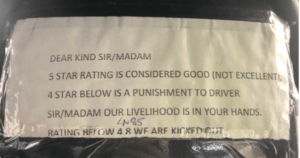
Horton isn’t a mind reader. He’s a professor at New York University, and he studies online marketplaces. His research found that most Uber/Lyft customers give their drivers a 5-star rating, regardless of the quality of the ride, the choice of music, or the stink of the car. Online publisher Mic recently broke the study down: “(P)eer-to-peer apps are designed to induce customer guilt and thus promote rating inflation. The act of sitting in a car with your service provider, the study found, humanizes them.”

I have a similar penchant for overly positive ratings when it comes to Goodreads. The social media app allows you to track the books you’re reading, have read, or want to read, and to rate and review those books, then share that information with others. Like Uber and Lyft, it uses a five-star rating system. As the husband of an author, I know how much work goes into researching, writing, editing, and revising a book, and it sways my Goodreads ratings. Absorbing, engaging, well-written page-turners that I want to read again and share with the world? That’s easy – five stars. Books that weren’t bad, but quickly forgettable? Five stars. Did the book fall flat, put me to sleep, or take a huge effort to even finish? Five stars, five stars, and five stars. Basically, if your book got four stars from me, you might want to put down your pen before you hurt somebody.

Economists, social scientists, and tech experts have been raising concerns about five-star rating systems for the last several years. A recent Harvard Business Review article stated :“(W)hile simple five-star systems are good enough at identifying and weeding out very low-quality products or suppliers, they do a poor job of separating good from great products.”

There is an inherent problem with five-star ratings, whether they are being used to select restaurants or book travel. And that glitch is heightened when the reviewer and reviewed have formed a human connection. Yet when it comes to measuring the work of federal employees, many agencies still use a five-step performance rating system. And there are few humanizing situations like a performance review.

It’s not as if we don’t have a problem with poor performance in the federal workplace.  In the latest Federal Employee Viewpoint Survey, only 36 percent of non-supervisory employees believed that appropriate steps are taken to deal with poor performers. And this problem has been around a lot longer than the FEVS. When looking through old MSPB reports for my recent And a Word With … interview with James Read, I came across the agency’s Federal Supervisors and Poor Performers, submitted to the President and Speaker of the House in 1999. The report’s executive summary states the following:

Federal employee surveys and other indicators over at least the last 18 years suggest that most employees, including supervisors themselves, judge the response to poor performance to be inadequate.

FELTG training attendees know that in any given year only three or four percent of removal actions (aside from suitability, probationary, or other less-common removals) are performance-based, while the remaining removals are conduct-related. Even a math-challenged Training Director can tell you those statistics are out of whack with 40 years of concern about performance.

There are dozens of reasons why poor performance problems continue to flourish seemingly unabated, and five-step performance systems probably won’t make anyone’s top five of those reasons. Not that there aren’t others reason to oppose five-step performance systems. They can even lead to overturned performance actions, as FELTG Past President Bill Wiley has explained previously.

Here’s the issue: The five-step performance systems offer sympathetic supervisors a gray area, giving them an out on a tough decision, and allowing performance problems to linger. In the tech world, the five-star rating systems fail to separate the good and great. In the federal workplace, those systems also fail to separate those successfully meeting their job requirements from those who aren’t.

In a five-step system, the third level is usually “fully successful” and the second level is usually “minimally successful.” As Barbara Haga points out during the Performance Management portion of her three-day Advanced Employee Relations course, an employee can be rated at Level 2 for his entire federal career and a performance-based action cannot be taken. [Side note: Don’t miss Barbara’s upcoming Advanced ER sessions in New Orleans or Atlanta.]

Why should we allow an employee who is not fully successful to continue working at that level with no apparent end? Oh, he won’t get any step increases. And he may lose some retreat rights in RIFs. Do you think that matters to the coworker watching this minimal performer do the absolute minimum?

By the way, if you did not give your Uber/Lyft driver a 5, kudos to you. You are not an uncaring human. In fact, the most altruistic customers are the ones who give honest feedback, according to Horton. As a result, they improve the rides for everyone.

So supervisors: Next time you’re making a decision on performance ratings, be as honest as possible, and improve the employment ride for the rest of your employees. [email protected]

By Dan Gephart, November 5, 2019

James Read, Director, Policy and Evaluation, Merit Systems Protection Board

Last month, we talked with MSPB General Counsel Tristan Leavitt about the adjudicatory and other work that the 200-plus employee agency continues to do despite not having any Board members since February. It’s a few weeks later and the Board still lacks members, while the lack of a quorum has inched even closer to hitting the three-year mark.

This month, we catch up with James Read. The former chief counsel for then-Member Robbins took over as director of the agency’s Policy and Evaluation office a few years ago. Read oversees the group of psychologists, HR specialists, statisticians, and lawyers who fulfill the agency’s statutory responsibility to conduct objective, non-partisan studies of the Federal civil service and other merit systems in the Executive Branch.

DG: How have your unit’s reports been hampered by the lack of a quorum?

JR: We’ve been putting out publications in shorter form since we lost the quorum, but it’s more than just length. The official reports as described in statute go to the President and Congress and are approved by the board, and they typically contain policy recommendations. They are only issued with approval of board members. Our thinking is that to the extent we can provide useful information through research briefs, we should. They are a little lighter on recommendations, but we have been putting out publications.

We have information about sexual harassment in the federal workplace that others don’t have. We’ve been releasing some of it, but an official report is on hold. Almost everything else we’ve been trying to convert to shorter publications.

DG: How do you measure whether a report is successful?

JR: We don’t have a hard measure. We look at the audience for which a report may be intended, and see what effect it had on the audience. Some reports are for policy makers. A successful report would be one that results in change of policy. An example would be our 2014 report that talked about veterans hiring, and a DOD-specific authority that was restricting competition for jobs and had other unintended consequences. Congress took it up and changed the law — and cited our report. That’s an example of success.

Other reports, we intend as educational pieces. Some are intended for managers and new leaders to help educate them. I’ve heard of chief learning officers in agencies using our reports to design in-house training. When that happens, a report did its job.

Sometimes, reports are intended for multiple audiences at the same time. We’ll have practice pointers intended for HR and managers, footnotes and appendices intended for researchers, people trying to replicate the work in their organization. We believe it’s important to show our work, so we remain credible. We’re not just sitting here in an ivory tower contemplating. We have an empirical basis for our findings.

DG: You recently asked for input on what reports people want to see. What kind of input did you get? What reports will you be doing based on that feedback?

JR: (We received) hundreds of ideas. The last time we went out asking for ideas was 2014, so five years on we felt we needed to refresh the ideas. The timing seemed to make sense with the lack of quorum. We went out to stakeholders, unions, chief human capital officers, affinity groups, and individuals. A lot of what we got were variations on themes of what we’ve seen throughout the years: Are whistleblower protections adequate? How can we improve the hiring, classification, compensation and performance management systems? Are they due for overhauls? How does the government adapt to changing expectations of younger workers? What alternatives might there be to the Title 5 system? We’ve been vetting and refining the ideas for several weeks now. Our goal is to have a proposed agenda to present to the new chairman when he arrives.

DG: What has been the most controversial report you’ve done?

JR:  A 2015 report of how agencies use various appointing authorities and the results of the different choices agencies make caused a bit of a stir. The report found Title 5 hiring rules systematically favor men over women. We found, for example, that since the 1970s, women’s participation in general civilian labor force grew from the lower 30 percent range to almost 50 percent, but in many years the government was not even reaching 40 percent.

The Civil Service Reform Act of 1978 states that the Government should strive to achieve a workforce representative of all segments of society. For many years now, women have been earning more bachelor’s degrees than men and they make up almost half the civilian workforce, yet under 40 percent of new hiring is women. This took people by surprise. They thought we were attacking OPM, and that was certainly not the intention. The biggest question raised by report was: What do we do about this?

One side note: We were criticized for not including VA nurses. If we had included them in the percentage of women as new hires, it would’ve been higher. But in a way, that criticism showed our point. We were looking at Title 5 hiring, and the nurses at the VA are hired under Title 38. So staying within Title 5 world, you do see a hiring system that appears to disadvantage women.

DG: Will you follow up on this report?

JR: I’d like to follow up. The last time I looked at the numbers was for FY 16 and they hadn’t budged. It’s a good area for follow-up, not a full-blown report but a dive into the statistics. It may be that to some extent women are making individual choices not to seek government employment in the same numbers as men do, so we need to study the applicant pool.

DG: The Supreme Court will rule this term on whether Title VII covers discrimination based on sexual orientation. You did a report on that a few years ago. However, that report wasn’t controversial. 

JR: There had been questions swirling for years: What’s the source of the prohibition? Title VII of the Civil Rights Act? The CSRA of 1978? Something else? We looked at the history of systematic discrimination against gay employees and the gradual change of view to acceptance. Clarity regarding the legal prohibitions was needed, but MSPB had be extremely careful not to come down on one side or another because MSPB is not a policy-making body. Every year since 2000 or so, there was someone in the House who introduced a bill to amend Title VII to prohibit discrimination in employment based on sexual orientation. We didn’t want to look like we were taking a side in the debate. We were expecting some backlash from the report, and we didn’t get it. The report was well-received.

DG: What other reports have had impact?

JR: There was a pair of related publications from 2015. One was a full report on due process, an official report to the President and Congress. Another report was on adverse actions. Deb (Hopkins, FELTG President) quoted from it in your newsletter recently, and that’s an illustration of its lasting power. In 2014-15, influential voices were saying “the system is broken, and you cannot fire a federal employee. Maybe we should go at-will.” It turned out that many people managing in the system didn’t understand it. They thought you needed a higher standard of proof to fire a federal employee than the law requires, and we pointed out that’s not the case. We developed an outreach program around the publications. The message I tried to deliver was managers need to understand the system and have the will to act, and the support of the agency. We don’t need to throw out rules or abandon due process.

DG: What do you see as the most significant challenge facing the civil service in the next 10 years?

JR: The relationship between Washington and local agencies needs to be recalibrated. I’m not suggesting one direction or another. Look at what happened in ’90s. OPM was cut in half in terms of its resources and authorities were delegated to the field. In the area of hiring, for example, you see the difficulties in the system. Twenty-five years ago there was the symbolic burning of the (Federal Personnel Manual). The rules and the laws upon which they were based were not repealed, however, even as OPM delegated authority to several hundreds of offices that now have the responsibility for developing sound recruitment strategies and rigorous legally compliant assessments, and then evaluating applications. That’s hard for a typical HR office to do that well; the exceptions would be the really big departments with ample resources and expertise that hire many people under same job series on a regular basis. In other words, hiring might not be susceptible to effective scaling down.

The challenge is recalibrating the model of central HR policymaking with local decision-making and execution in such a way that HR can be done better. We’ve been studying the effectiveness of the HR workforce, and are finding that there’s great dissatisfaction among managers and agency leaders on what they are getting from their HR shops. It’s not necessarily the fault of the people in HR. The dissatisfaction may stem from the challenges intrinsic to the current decentralized model.

[email protected]

By Dan Gephart, October 16, 2019

The Supreme Court decision in Price Waterhouse v. Hopkins, 490 U.S. 228 (1989) made it clear that Title VII not only protects employees from being treated differently based on their sex. It also protects employees from being treated differently because they fail to adhere to their gender norms.

We are beyond the day when an employer could evaluate employees by assuming or insisting that they matched the stereotype associated with their group, for ‘[i]n forbidding employers to discriminate against individuals because of their sex, Congress intended to strike at the entire spectrum of disparate treatment of men and women resulting from sex stereotypes.’

The Hopkins decision is the bedrock for protection from gender stereotypes under Title VII. In recent years, the EEOC has interpreted that protection to include gay, lesbian, and transgender employees.

In Macy v. Attorney General, EEOC No. 0120120821 (April 20, 2012), the EEOC concluded that “intentional discrimination against a transgender individual because that person is transgender is, by definition, discrimination ‘based on…sex’ and such discrimination therefore violates Title VII.”  And in Baldwin v. Secretary of Transportation, EEOC Appeal No. 0120133080 (July 15, 2015), the EEOC ruled that “sexual orientation discrimination is sex discrimination because it necessarily entails treating an employee less favorably because of the employee’s sex.”

Many courts have agreed with the EEOC. The 11th Circuit Court of Appeals may have put it most succinctly, at least in terms of transgender employees, ruling “a person is defined as transgender precisely because of the perception that his or her behavior transgresses gender stereotypes.”

But not all courts agree with the Commission. And neither does the Department of Justice. DOJ attorneys made their case last week before the Supreme Court, which heard oral arguments on Bostock v. Clayton City and Zarda v. Altitude Express, to determine whether discrimination against an employee because of sexual orientation constitutes prohibited employment discrimination “because of … sex” within the meaning of Title VII of the Civil Rights Act of 1964. The High Court also heard arguments in Harris Funeral Homes v. EEOC to determine whether Title VII prohibits discrimination against transgender people based on (1) their status as transgender or (2) sex stereotyping under Price Waterhouse v. Hopkins.

During the hearing last week, Solicitor General Noel Fancisco argued: “Sex means whether you’re male or female, not whether you’re gay or straight.” The lawyer representing Bostock and Zarda told the Justices that all they need to do is “show that sex played a role here.”

How will the Supreme Court rule? It’s hard to guess. If you saw my football pools this year, you’d immediately look elsewhere for prognostication. And if you’re talking legal analysis, you’d be much better off asking FELTG President Deborah Hopkins, or read FELTG instructor Meghan Droste’s recent article.

Many analysts see a 5-4 decision with Justice Neil Gorsuch as the deciding vote.

One thing we know for sure: A ruling in the Department of Justice’s favor will allow employers, including federal agencies, to fire an employee solely for being gay, lesbian, or transgender, or even for being someone who doesn’t neatly conform to gender-based standards. It’ll strike a serious blow to diversity and inclusion in the federal workplace.

Let’s face it, not everybody has a comfortable grip on the law as it is now. It’s painful to imagine a workplace where the actions described in the following EEOC decisions go unchecked:

  • In Larita G. v. USPS, EEOC No. 0120142154 (November 18, 2015), a supervisor referred multiple times to a lesbian employee as “the little boy” or a “guy.” When the complainant told the supervisor “I am not a guy, I am a lady,” the supervisor replied, “So that’s why you have to be so difficult.”
  • In Couch v. Department of Energy, EEOC No. 0120131136 (August 13, 2013), coworkers told the complainant that he was unwelcome and should get another job. They referred to him as “fag,” “faggot” and “gay” and told him everything he did was “gay.”
  • In Jameson v. USPS, EEOC No. 0120130992 (May 21, 2013), the EEOC found hostile work environment as the supervisor “repeatedly” referred to a transgender female employee as “he” and encouraged others in the workplace to use the male pronoun and refer to the employee by the employee’s previous, male name.

Actually, behavior like that in the EEOC cases above still does sometimes go unchecked. Last week, the American Federation of Government Employees Local 3403 demanded the agency take action against managers who bullied, intimidated, and harassed LGBT employees at the National Science Foundation.

It could get a lot worse for LGBTQ+ employees depending on how the Supreme Court eventually rules on this trio of gender stereotyping cases. [email protected]

By Dan Gephart, September 18, 2019

Welcome to FY 2020. Didn’t it feel like we spent most of the previous fiscal year waiting? Waiting for new Merit Systems Protection Board members to be confirmed. Waiting for some type of resolution on the portion of President Trump’s Executive Orders that were under injunction. Waiting for guidance from OPM.

But we’re waiting no more, at least when it comes to the Executive Orders. In case you missed it, here’s a quick recap. President Trump issued three Executive Orders in May 2018 aimed at curtailing union activity and increasing supervisors’ ability to hold employees accountable for misconduct and poor performance. Three months later, several provisions of those Executive Orders were set aside as illegal, per a D.C. District Court decision. Several weeks ago, an Appeals Court overturned the District Court decision. The unions sought an en banc re-hearing, which the Appeals Court has refused.

What does that all mean? Well, the Executive Orders are now fully in play. OPM Director Dale Cabannis was quick to alert agencies, writing in an October 4 memo: “Accordingly, all provisions of these executive orders, including previously enjoined provisions, are in full force and effect and should be implemented consistent with the requirements and guidance contained in the EOs.”

Agencies are now expected to set time limits on bargaining, severely restrict official time, and are allowed to charge unions rent for office space, and that’s just the Labor Relations portions of the Executive Orders, and the president issued a memo to that effect last week. If you deal with federal unions, it’s a good time to register for FELTG’s FLRA Law Week, which takes place next week – October 21-25, 2019 in Washington, DC.

Speaking of the FLRA, the agency recently started posting quarterly case digest with summaries of its decisions. These digests contain summaries of full-length merit decisions issued by the authority. This is part of the FLRA’s strategic to plan to make those decisions more easily accessible. The digests are available on the FLRA website.

That October 4 memo wasn’t the only one the OPM Director sent to agencies. The previous week, Cabaniss issued  Maximization of Employee Performance Management and Engagement by Streamlining Agency Performance and Dismissal Policies and Procedures. Among the items discussed are streamlining performance and misconduct procedures and eliminating unnecessary barriers to holding employees accountable.

If those topics sound familiar to you in FELTG Nation, it might be because that’s what we’ve been teaching for the past 19-plus years. Those of you who have been to MSPB Law Week or Developing & Defending Discipline have a nice head start on what OPM wants. You might equate unnecessary barriers to what we at FELTG call “yellow donut” items. The yellow donut is full of things that are perfectly legal to do, but are legally useless in developing your performance- or misconduct-based actions. They waste your time and misdirect your efforts. As Deb puts it, the yellow donut is full of empty calories.

And hey, how about those MSPB appointments? Just kidding. I’m afraid we’re still waiting for those. In the meantime, be sure check out to last month’s And Now A Word With … Tristan Leavitt, where the MSPB General explained to FELTG readers what the agency is still doing while it waits for the return of a quorum. Lots going on, and lots more to come. We’ll keep you posted. [email protected]

Tristan Leavitt, General Counsel, Merit Systems Protection Board

By Dan Gephart, October 1, 2019

More than 200 employees work for the Merit Systems Protection Board in numerous regional and field offices across the country. But it’s the three offices that sit empty at the Board’s Washington, D.C., headquarters that have drawn the most attention.

It’s been more than seven months since then-Chairman Mark Robbins’ term expired. Robbins spent his last two years as the Board’s only member. The Board has lacked a quorum since January 2017 and, therefore, has been unable to issue final decisions on petitions for review for almost three years.

While those three offices on the MSPB’s Executive Floor sit dark, its career employees continue to toil away. We caught up with General Counsel Tristan Leavitt to find out what the MSPB has been doing – and what it has not been able to do – since former Chairman Susan Grundmann’s departure nearly three years ago, when the Board last had a quorum. Under the MSPB’s continuity of operations plan, Leavitt, as GC, has assumed the responsibilities for the executive and administrative functions vested in the Chairman.

Before joining MSPB a year ago, Leavitt was principal deputy special counsel at the U.S. Office of Special Counsel. He also worked for eight years on Capitol Hill, where he served on the staff of the House Oversight and Government Reform Committee and the Senate Judiciary Committee.

DG: Tell us about the work that continues on the adjudication side at MSPB.

LT: AJs have issued approximately 14,550 initial decisions since the Board first lost its quorum in January 2017. At that point, parties have two options. The first option is to submit a petition for review to the full Board, at which point MSPB’s Office of the Clerk dockets the appeal and MSPB’s Office of Appeals Counsel prepares a draft opinion for Board member consideration.

Of the approximately 2,325 PFRs currently pending at MSPB headquarters as of August 31, 2019, 2,180 have had draft opinions prepared by the Office of Appeals Counsel. (MSPB publishes these numbers monthly.) If a petition for review of an initial decision isn’t filed within 35 days, the decision becomes the final decision of the MSPB, at which point the appellant may appeal it to the U.S. Court of Appeals for the Federal Circuit or, in whistleblower cases, to any U.S. Court of Appeals in the country.

In addition, mixed cases may be appealed to a U.S. district court. MSPB’s Office of General Counsel continues to review such federal filings and represents the MSPB as necessary in litigation.

DG: How many PFRs involve back pay or attorney’s fees?

TL:  MSPB doesn’t track at an enterprise level which PFRs involve back pay or attorney’s fees, but 177 are PFRs or cross-PFRs from agencies, and of those, 95 involved the AJ ordering some form of interim relief in the initial decision.

DG: What other work does the MSPB continue to do?

TL: In addition to these various functions surrounding adjudicative work, MSPB’s Office of Policy and Evaluation continues to conduct research pursuant to the agency’s statutory mission to conduct studies of the merit system. [Editor’s note: We’ll have more on the MSPB’s studies in an upcoming article.] Although MSPB does not issue final studies without a quorum, the agency has conducted research and prepared a number of draft reports for an incoming Board to review and consider publishing.

MSPB has also continued to publish a regular newsletter and issue smaller publications on useful topics such as Remedying Unacceptable Employee Performance in the Federal Civil ServiceImproving Federal Leadership Through Better Probationary Practices, and The Perceived Incidence of Prohibited Personnel Practices.

DG: What functions have been impacted most, other than the growing PFRs, over the course of this lack of quorum?

TL: Besides the Board itself issuing no decisions, the largest impact on the adjudicative side is the inability to issue stays in response to requests from the Office of Special Counsel. MSPB is also impacted in its studies function and on the regulatory side, where the agency cannot promulgate substantive regulations in the absence of a quorum.

DG: Is there a plan or structure in place so that when Board members are confirmed, they can most efficiently begin to tackle the backlog?

TL: Because the approach to the backlog ultimately is the prerogative of a Board itself, it’s difficult to make definitive plans at this point regarding how to tackle the backlog. Nevertheless, MSPB has taken a number of steps to prepare to swiftly carry out whichever approach a new Board settles on. A new Board will be able to see which types of cases are in the backlog and how old they are. Staff have also drawn up various plans for dealing with the backlog, which the new Board may adopt or modify.

[email protected]