
Posts

By Dan Gephart, November 23, 2020

On the heels of positive vaccine news, talk about the eventual return to workplace normalcy has picked up. But that normalcy does not necessarily mean a sudden end to remote working, especially if government workers have a say.

Eighty-five percent of state and local government employees who did not work at home before COVID-19 want to continue working remotely permanently, at least part of the time, according to a recent survey by CPS HR Consulting. This fascinating report Leading Through a Pandemic: The Impact of COVID-19 on the Public-Sector Workforce, like most of the organization’s work, was focused on state and local governments. But it’s not a stretch to think that many federal employees feel the same as their more local counterparts.

Agency leaders are embracing telework, too. Several told Congress last week they also hope to make telework more permanent in the post-pandemic world. The CPS HR Consulting survey determined that “government should also view the demand for remote work as an opportunity to expand the search for talent (i.e., recruiting may no longer be limited by geography)” and that “leaders need to systematically ask employees for feedback to identify and meet the needs of all employees.” CPS HR Consulting suggests that government organizations:

  • Equip managers and supervisors with the skills to manage results and outcomes (and not just time and attendance)
  • Redesign jobs to adapt them to remote work
  • Acknowledge and communicate that employees working from home must have the flexibility to balance work and personal lives
  • Provide the tools and resources remote workers need, especially technology

“Effective leadership, flexible work environments and effective use of technology can drive employee productivity, well-being and engagement and, therefore, organizational performance – regardless of where employees are working.”

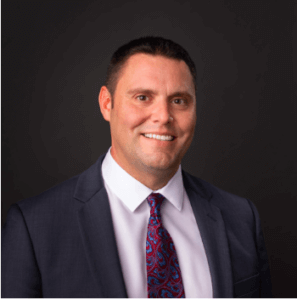
This month, we continue our conversation with Bob Lavigna, director of CPS HR’s Institute for Public Sector Employee Engagement. Lavigna (pictured above) is the former vice president of research for the Partnership for Public Service and author of Engaging Government Employees: Motivate and Inspire Your People to Achieve Superior Performance.

DG: How do you “equip managers and supervisors with the skills to manage results and outcomes (and not just time and attendance)?”

BL: When employees are working remotely, it’s no longer possible for managers/supervisors to know if employees are working productively simply by seeing them at their desks or work sites. Managing in this new and different environment is often difficult. According to one government HR executive, managing remote employees means ditching the, “If I can’t see you, you’re not working” mentality.

Instead, leaders need to measure and manage goals, results and outcomes, not just time and attendance. This often-difficult transition requires new performance metrics, tools, systems, and expectations. And, where possible, even linking financial rewards to results.

To help managers and supervisors adapt, organizations are providing training, tools, resources and tips on leading a remote workforce. Many of these programs are online (including our own CPS HR Consulting training curriculum). For example, one city has assembled a manager’s toolkit that includes tips, articles, webinars, etc. on managing a remote workforce. Organizations are also setting the expectation that managers and supervisors need to be more flexible. According to one government executive, “We’ve had to drastically change,” putting aside the usual focus on counting workers’ hours and days. “People who have kids need to take an hour off to put someone down for a nap or to make a peanut butter and jelly sandwich.”

Government may also need to change how leaders are identified and selected. Organizations need to select managers and supervisors who can manage effectively in this new environment, instead of advancing employees because they have good technical skills or have long tenures.

DG: The report revealed that employees were “anxious” and “stressed” and unsettled, but that was early on in the crisis. Do you think that the answers would be different now? 

BL: Good question. There is some evidence (e.g., from Gallup) that engagement levels were on the rise after declining at the beginning of the COVID-19 pandemic. However, the recent resurgence of the coronavirus is likely to keep everyone unsettled and on edge. I don’t think anxiety and stress will decline until we have an effective vaccine and see some light at the end of this tunnel.

DG: There’s a general assumption among many remote workers that when you work at home, you work more hours. While 34 percent of remote working respondents said they were working more, the majority are not. Is that general assumption just wrong?

BL: I think that 34 percent is a substantial number. But I question the assumption that, during COVID-19, working remotely automatically translates into working more. Given the other factors that affect the ability to work remotely, like the availability of technology and personal responsibilities such as dealing with kids and spouses at home, I don’t think it’s possible yet to evaluate whether the new working environment has resulted in increased workloads. Let’s see what happens when things get back to “normal.” What has clearly changed, however, is when work is getting done.Employees operating remotely are working when they can, while also balancing their personal responsibilities. Therefore, the traditional workday has been stretched.

And we believe this is a permanent change. As the research conducted by the Institute and others has shown, employees working remotely for the first time want to continue this arrangement permanently, at least part-time. In other words, the world of work has dramatically changed. Organizations, including in government, need to adapt to – and not resist – this evolution. Otherwise, government will not be able to attract and retain top talent.

DG: Some employees view attempts to engage them skeptically. How do you get past that?

BL: In our work conducting engagement surveys across the nation, we’ve encountered this skepticism. I remember one employee who stated during an employee engagement kickoff meeting that, in his opinion, the organization’s focus on engagement was merely a cynical attempt to squeeze more work out of employees. My answer was that efforts to improve engagement – done right – should be a win-win. Employees feel better about their work and their organization, and, therefore, are motivated to deliver for the people they serve.

But what does “done right” mean? It means surveying employees to understand empirically what the workforce issues are, preserving the confidentiality of employees’ responses, sharing survey results, making a long-term commitment to improving engagement and – most important – taking action on survey results. Organizations that survey and then fail to act on the results will see a decline in engagement – and an increase in skepticism. And they will deserve these outcomes.

DG: What role does onboarding play in the eventual success or failure of employee engagement efforts? And, if it does have an impact, how do you make sure that remote onboarding lays the groundwork for successful employee engagement?

BL: You only get one chance to make a first impression. Research, including by the Partnership for Public Service, has shown that effectively onboarding new employees results in a higher level of engagement, lower turnover and faster time to full productivity.

But it’s important to define what onboarding is – an integrated set of activities during the new employee’s entire first year that provides the information, support and resources the employee needs to succeed.

Of course, like most activities with a remote workforce, onboarding becomes more complicated. But the fundamentals are the same – provide tools and resources, connect with the supervisor, assign work, set expectations, deliver training and provide feedback. For remote workers, these steps may need to be done virtually. I have worked remotely from my home in Madison, WI for two organizations (way before COVID). In both cases, I was onboarded pretty seamlessly, including setting up my laptop, printer, etc. It can be done, even with a remote workforce.

[Editor’s note: Bring FELTG’s popular webinar training Manging a Mobile Workforce: Tools for Accountability to your agency. For more information, contact Dan Gephart at [email protected]]
By Dan Gephart, November 17, 2020

While the nation is grappling with a pandemic, the government’s most well-known scientist has been besieged with death threats. And as more than 150 million people exercised their right to vote earlier this month, state and local officials, as well as volunteer poll workers, also faced violent threats as they attempted to count the ballots.

This dangerous risk to our nation’s civil servants is not new.

A September 2019 GAO report and a subsequent article by Government Executive laid out the stark reality of the dangers faced by federal employees at one particular agency — the Bureau of Land Management. The report included numerous examples of violence against BLM employees, including an employee who was stabbed outside a federal building, and another who received hundreds of aggressive calls, including death threats, after someone posted his phone number on Twitter.

So you bet I listened closely last week as FELTG Instructor Shana Palmieri, LCSW, delivered the third and final of the webinars in her Behavioral Health series — Threats of Violence in the Federal Workplace: Assessing Risk and Taking Action. (The previous webinars were Understanding and Managing Federal Employees with Behavioral Health Issues and Suicidal Employees in the Federal Workplace: Your Actions Can Save a Life.)

Violence can come from a current or former employee, a customer/patient, a domestic partner, a personal conflict that spills into the workplace, or someone not known to the agency. Regardless of where the threat is coming from, it’s awfully hard to predict. More than 3 percent of the general US population commits one or more violent acts each year.

What are the factors that lead to violence? A lack of education, decreased social stability, and high unemployment are factors.

What’s not a factor? Mental illness. The majority of patients with stable mental illness do NOT present an increased risk for violence. In fact, researchers estimate that only 4 percent of violence in the United States can be attributed to mental illness.

“The potential of violence lies within all of us,” Palmieri said during the webinar. “It’s something anybody can be driven to as a human, not just a result of mental health (issues).”

During the webinar, Shana offered numerous suggestions for risk assessment and response management plans, with a focus on “intervention early on and using practices that are evidence-based to mitigate or de-escalate the potential for violence to occur.”

If you missed the webinar, and you’d like to book Palmieri, who handled the psychiatric aftermath of the Navy Yard shooting in 2013, to come to your agency (virtually or in-person), email me at [email protected].

In the meantime, you can share with your staff these techniques for de-escalating aggressive and potentially violent behavior, which were discussed more in-depth during the training:

  • Respect personal space – do not move towards employee. Don’t lean into the employee. Keep your distance.
  • Be aware of your body position. Stand at an angle. “You don’t want to come in with a defensive stance. If I’m standing face-to-face, staring them right in the eyes that’s a defensive stance,” she said.
  • Use a calm voice. If the aggressor gets loud, speak quietly. People tend to mirror those they are engaging with.
  • Be empathetic and validate the person’s feelings. You don’t have to agree with the content of what the individual is saying, but you can let them know you understand that they’re feeling angry. “Stay calm,” Palmieri said. “Be present.”
  • Avoid all power struggles. People who are angry will try to bring you into the fight. Don’t let them trigger you. “It’s very important to avoid that power struggle,” Palmieri said. “It will only escalate the dynamic. It’s not the time to fight the battle.”

[email protected]

By Dan Gephart, November 10, 2020

We’re still a good half-year away from the next Public Service Recognition Week, but we need not wait until May 2021 to recognize the critical work civil servants have done over the last several months.

You know it’s a challenging year when the (arguably) most well-known and respected federal employee, Dr. Anthony Fauci, needs to be protected from constant death threats – at the same time he and his colleagues are working to save lives. Meanwhile, we need to recognize the important work everyone else out there in FELTG Nation is doing during these very trying, and logistically challenging times.

Recognition is a key part of employee engagement, and so we reached out this week to someone who knows a lot about both subjects. Bob Lavigna (pictured above), the former vice president of research for the nonprofit/non-partisan Partnership for Public Service, directed the annual Best Places to Work in Federal Government. The Partnership was also responsible for the federal government’s wide embrace of Public Service Recognition Week, providing a toolkit, organizing events, and facilitating executive proclamations.

Lavigna, author of Engaging Government Employees: Motivate and Inspire Your People to Achieve Superior Performance, is now director of the CPS HR Institute for Public Sector Employee Engagement. He has also been assistant vice chancellor and director of HR for the University of Wisconsin — and he’s a previous winner of Governing Magazine’s Public Official of the Year award.

Lavigna’s focus these days at CPS is on local and state government, as well as nonprofits, but his advice and perspective are as useful as ever for federal leaders.

DG: Not considering the pandemic, what are the biggest barriers keeping supervisors from being better at employee engagement?

BL: I think there are two primary barriers – not understanding why improving engagement is important and not knowing how to improve it.

In the first case, supervisors often consider engagement to be just another touchy-feely HR fad or about making employees happy all the time. And their job is to deliver results, not make sure everyone is happy. What these managers and supervisors often fail to realize is that improving engagement drives productivity and results. In other words, they don’t appreciate the business case for engagement. As I describe in Engaging Government Employees, decades of research, including in government, have clearly shown that improving engagement can dramatically improve organizational performance.

The second reason concerns how to improve engagement. Too often, even when leaders want to improve engagement, they guess about how. The book 180 Ways to Build Employee Engagement includes great suggestions. The challenge is to figure out what will work in an individual organization or work unit. Too often, leaders act without data on what matters to their employees.

Research has shown that the best way to understand the level of engagement is, and what influences engagement, is to conduct an engagement survey. As we advise the public-sector organizations we conduct engagement surveys for, it’s important to generate survey data and drill down to the work-unit level. We can’t prescribe a solution without understanding what the condition is.

DG: Are remote workplace situations a barrier to engagement, or can remote workplaces be an opportunity to improve engagement? And, if so, how?

BL: There are clearly challenges to maintaining the engagement of employees working remotely. However, while it may be a cliché that the flip side of challenge is opportunity, I think this cliché applies today. Organizations that take care of remote employees can actually boost engagement. Taking care means:

Providing strong and visible leadership. Leaders need to continue to be visible, even if not in person. Leaders also should manage goals, results and outcomes, not just attendance and activities. And effective leaders understand that employees working remotely need to balance their work and personal lives. According to one government leader: “We’ve had to drastically change. People who have kids need to take an hour off to put someone down for a nap or to make a peanut butter and jelly sandwich.” Leaders also communicate through multiple means (i.e., not just email or messaging), using telephone, web sites, blogs, intranet, Twitter, Facebook; and face-to-face communication platforms like Zoom, Teams, WebEx and Skype.

Continue to focus on training and development. It might be tempting to overlook employee development as we scramble to adapt to the COVID-19 workplace. But this would be a mistake. Managers, supervisors and employees should continue to focus on development, using options that don’t require in-person contact, including the explosion in online training.

Recognize accomplishments. Our Institute’s national survey has consistently found that a key driver of engagement is making sure that employees feel valued. This can be tough without physical proximity, but it’s important to recognize the contributions and accomplishments of employees working remotely, as well as the employees who continue to report to their work sites.

DG: Many people are suffering from “Zoom fatigue.” They’re just tired of communicating over the computer. Is there ever a danger of over-engagement?

BL: Over Zooming can be a problem, but is not the same as over-engaging. Our research, and the research of others, has shown that employee engagement is low, including in government. I don’t think we should worry about over-engagement, at least not yet.

But we should worry about over Zooming. As our Institute has emphasized, simply seeing employees at work, whether in person or via computer, is no guarantee that employees are being productive. In fact, too many video meetings may actually reduce productivity, Managers and supervisors need to move away from the need to simply see their employees at work. Instead, they should manage goals, products and outcomes; not activities, time and Zoom attendance. More focus on the former and less on the latter will improve productivity and minimize any Zoom fatigue. [Editor’s note: For more guidance on communication in a remote environment, read about Zoom Zombies, and/or register for The Performance Equation: Providing Feedback that Makes a DIfference.]

We’ll talk more with Mr. Lavigna about the latest trends in employee engagement in an upcoming FELTG Flash. [email protected]

By Dan Gephart, October 14, 2020

This time of year is celebrated widely and wildly in the neighborhood where I once lived. Faux spider webs, mock tombstones, humongous inflatable black cats, and DIY haunted garages would overtake North Palm Beach Heights, drawing trick-or-treaters, gawkers and street drinkers from miles away.

I don’t know if anything has changed in the Heights. My guess is that it’s as wacky as ever. I’m glad I’m not there. It’s hard to get into an appropriately festive mood this Halloween. Numerous events over the last several months – acres-ravaging wildfires, multiple hurricane threats, social unrest, and a pandemic that has killed more than 200,000 Americans – have made real life a little too scary. Heck, we’ve been wearing masks (at least those of us who care about our fellow humans) for several months already.

So excuse me if I don’t have the Halloween spirit this year. You too can certainly ignore this holiday. It’s easy. Forgo the costumes. Turn off your outdoor lights. And don’t answer the door.

Unfortunately, Halloween-like behaviors are happening every day at work – and your fate will be worse than a house-egging if you ignore the Energy Vampires, Zoom Zombies, or Garish Ghouls.

Energy Vampires

The majority of employees, maybe 80 percent, are good workers. You wouldn’t call them stellar. You’d probably call them “OK” or “fair” or consider them your “no problem” employees. Then you have the 10 percent of employees who actually are stellar – your top performers.

And then you have the bottom 10 percent. That’s where the “toxic” Energy Vampires reside.

They are the ones who, either because of performance problems or misconduct, drain everything from you. They are exhausting. You take them and their issues home with you. They’re a big the reason for your stress and anxiety. They take up an inordinate amount of your time, meaning those 80 percent aren’t getting the kind of management they need to join the top 10 percent. And those 10 percent stellar employees are probably not getting the recognition they deserve.

So what do you do? You take action, and you do it quickly and effectively. If you’re not sure how to do that, well I have good news: We do. That’s what FELTG is known for. Email me and we’ll bring one of our instructors to your supervisors. To find out more, read what we cover in our UnCivil Servant, Developing & Defending Discipline, and Managing Accountability classes, as well as our other Supervisory Training offerings. All of these trainings are offered both virtually and, in person, depending on your circumstances.

Zoom Zombies

The Zoom Zombies are a relatively new creature in the workplace. As work moved remote, agencies have relied on platforms like Zoom, Teams, Webex, and Skype to meet. The Zoom Zombies don’t seem quite there during these virtual meetings. Truth is, they know where the mute button is – and they’re not afraid to use it.

Are they even there? What are they doing? Honestly, they’re probably doing other work, talking to their children or their fellow teleworking spouse/partner. What can you do here? FELTG instructor/author Dr. Anthony Marchese offers four ways to put to an end to the Zoom Zombie:

  1. Don’t structure your virtual meetings the same as your face-to-face meetings. Make them less about information dissemination and more about “doing.” Use your meetings to collaborate and brainstorm. Create the expectation that everyone will contribute and not use mute unless absolutely necessary.
  2. To promote involvement and rebuild team cohesion, devote a portion of your meeting to positive aspects of working remotely/life during a pandemic. Select a different person each week to share something new he or she has learned about themselves during the past six months. Your zombies will likely tune in to hear more.
  3. Fully embrace the technology to encourage interactivity. Add video, whiteboards, polls, and chats to make the meeting more interactive.
  4. Avoid getting into a rut. Think of different approaches for your meetings. First, what is the reason for having the meeting in the first place? Next, consider: Am I defaulting to a “meeting” because that’s what I’ve done before? If I only have 60 minutes with my team this week, what can we do to best use that time? What does my team really need from me? From one another?

To hear more from Dr. Marchese, join him for the half-day virtual training event The Performance Equation: Providing Feedback That Makes a Difference on Wednesday, October 28 starting at 12:30 pm ET.

Garish Ghouls

Any time I read recent EEO case law, I feel like I’m watching a particularly cringe-worthy episode of Mad Men. People don’t really still do these things, do they? Yes, they do. Want a recent example? Read Deb Hopkins’ article last month about a now-former (thankfully) Fed named Dave.

There is way too much harassment and bullying going on in the federal workplace these days. Yes, some EEO claims are frivolous, over-reactions to being held accountable. But a lot of harassment that is going unreported. The #MeToo movement has brought light to the issue, yet much, sadly, remains hidden away due to embarrassment or fear.

Ghouls can thrive whether in the office or at home. In fact, the home environment makes some harassers more comfortable to take their actions. Regardless of where the workplace harassment takes, there is one important thing you need to know: You CANNOT wait to discipline the employee.

If you’re aware of inappropriate sexual conduct, you must take action. Right away. It doesn’t matter if a complaint hasn’t been filed. The other thing you’ll notice from reading EEO decisions is that they take a long time to get resolved. If you wait for that process to unwind, the agency harasser will commit more offensive actions. It’s your responsibility to protect your employee from harm and protect your agency from liability.

And here’s how you do that:

  • Take all harassment allegations seriously.
  • Stop the harassment, separating the alleged harasser from the situation.
  • Promptly investigate and take quick action.

Harassment Investigations will be covered on the second day of Workplace Investigations Week Nov. 16-20. Register here.

If you’re looking for something shorter, join instructor Katherine Atkinson for the 60-minute webinar Preventing and Correcting Hostile Environment Harassment next week (October 20 starting at 1 pm ET). [email protected]

By Dan Gephart, October 6, 2020

Gourds, pumpkin spice, a slight nip in the air, falling leaves. It’s all a reminder for many supervisors that it’s time to start working on those end-of-the-year performance reviews. Many federal employees will be getting feedback on their performance for the first time since their last review. And that, FELTG Nation, is inexcusable.

Whether it’s anxiety, frustration, or confusion, you cannot afford to avoid regular, honest performance-related discussions with your employees any longer. Providing feedback effectively is a skill — one that every supervisor can and should develop.

FELTG Instructor Dr. Anthony MarcheseFELTG Instructor Anthony Marchese will present The Performance Equation: Providing Feedback That Makes a Difference on October 28 from 12:30 – 4 pm ET. I caught up with Tony, who besides teaching for FELTG is a consultant, author and former academic dean, to talk about performance feedback.
DG: Why is feedback so important?

AM: Feedback is essential for growth. It is embedded in some of our earliest experiences. It helps provide a map of meaning to help direc

t us toward desirable behavior. In other words, it helps us to understand where we are in relationship to where we could or should be. It helps reinforce positive behavior and offers insights into where we may need to adjust behavior that is incongruous with expectations.

DG: Does it always have to be formal?

AM: Definitely not! However, before we discuss delivery methods, we need to ensure that it is happening. In a recent study, Gallup reported that 50 percent of surveyed employees (from a variety of sectors) did not know what their managers expected of them on a daily basis. Forty-seven percent of respondents indicated that they receive feedback only a few times a year or less. If an employee consistently possesses that level of uncertainty further reinforced by an absence of performance conversations, it is unlikely that they will receive a positive performance review. It is a near impossibility that they will exceed expectations. Consider how the current pandemic may have further exacerbated ambiguity, uncertainty, and the frequency of performance conversations. We must do better.

DG: Speaking of the pandemic, a majority of federal employees are working from home now. What are some pitfalls for supervisors to avoid when providing feedback remotely?

AM: Try to avoid negative surprises. Let your employee know in advance what you’d like to discuss. Provide specific, self-introspective questions to help them prepare for the conversation by carefully considering their performance and be ready to discuss what to continue, discontinue, and how to do it. Also:

  • Try to avoid using a virtual feedback conversation to test out a new, unfamiliar technology. Video is always better. Make sure that you and your employee know how to use it. Remember, nonverbal cues are incredibly important and can be easily
  • missed when not meeting face-to-face or using video. Let them see you. Be sure to see them.
  • Try to make the feedback session an active, brainstorming experience. Rather than spending the time “telling,” consider a structure that encourages equal participation, reflection, and problem-solving. This energy helps mitigate the Zoom fatigue plaguing so many right now and also positions the supervisor as a collaborative partner in helping your employee be at their best.

DG: How do you provide feedback to essential workers who are so busy they don’t have time for a feedback session?

AM: If a supervisor is too busy to provide feedback, he or she is too busy to be a supervisor.

More than ever, it is important that each employee feels connected to her or his supervisor. In a world filled with uncertainty, anxiety, and exhaustion, supervisors who choose not to take the time to provide feedback perpetuate an already difficult situation.

Feedback can come in many forms. It is not limited to a 60-minute, sit-down session in an office. It can occur during a weekly one-on-one. It can occur via e-mail following a deliverable. It can be offered by colleagues (a 360 perspective is important). Right now is a great time to rethink how we provide feedback. For example, rather than a supervisor leading a session during which they “tell” their employee how they did, they may want to consider positioning the meeting as an inquiry opportunity. This helps promote individual ownership for performance. Supervisors should be curious. Ask questions of their employees like: How did you think the planning session went? What worked well? What would you change? Here is what I observed. What can we do together next time to ensure whatever a successful outcome would be?

Since most work-related communication has been interrupted/impacted by the pandemic, supervisors may want to reconsider how they leverage their one-on-ones, team meetings, and emails.

DG: What is the one thing every supervisor could do immediately to improve feedback?

AM: The most important thing is simply to do it. Don’t contribute to the 50 percent of employees who are unclear about what they should be doing. Here are a few other ideas to consider:

  • Conduct a self-assessment. Ask yourself: Do my employees know what I expect of them? How am I so sure?
  • Conduct a team assessment: Ask your employees (individually): Do you feel like you have what you need from me to perform your job well? What can I do/provide to ensure that you have what you need? What should I do more of/less of?
  • Performance feedback needs to consider both the “what” and the “how”. Many supervisors assume that once they provide feedback (especially constructive), their employees will know precisely how to change. This is often a false assumption. When providing feedback, discuss with your employee a strategy (with identified goals, resources, timelines, and accountability) to help support their efforts.

If you’d like to bring Dr. Marchese to your agency for training on feedback, communication or any leadership-related topic, email [email protected].

By Dan Gephart, September 29, 2020

If you’re a regular reader of Barbara Haga’s articles in our monthly newsletter (and if you’re not, what’s wrong with you?), you may have noticed a common thread weaved within her last two articles.

Sometimes, federal employees lie.

Earlier this month, Barbara told the tale of an FAA civil engineer who was asked point blank if she used her work computer “for unofficial personal reasons while on duty for any reason.” Her reply was a simple “no.” Unfortunately for the engineer, the agency had already compiled an Internet history of the computer in question and found more than 33,968 nonwork-related transactions on sites, such as Amazon, eBay, and Etsy. Further investigation revealed that the employee was actually running her Etsy business from her work computer.

A month earlier, Barbara wrote about an employee who denied sending inappropriate text messages, many of a racist nature, on her phone by replying “I do not admit to the validity of these messages.”

In both of these cases, the agency had one thing going for it – a lot of evidence.

But when you’re doing investigation of hostile work environment harassment, sometimes there isn’t much evidence, so you end up with the classic he said/she said situation. How do you determine credibility, especially when there is so much raw emotion involved? And how do you do it during a pandemic, when the interviews are being done remotely?

Next week, October 6-8, 2020, FELTG will present the virtual training Conducting Effective Harassment Investigations. On the third and final day of the seminar, FELTG instructor Meghan Droste will cover everything from interviews to writing the report, including a module on determining credibility.

First off, the EEOC has recognized that being able to see a witness is crucial to gauging credibility, so be sure that you have a reliable webcast platform like Zoom or Skype. Although you’re no longer in the same room, you should still be able to read demeanor and body language.

Here’s what you do: Start with easy questions. Monitor how the employee moves, including facial expressions. This sets a baseline for how the interviewee will react when telling the truth. Then start to toss in tougher questions. Look for a difference in reactions. Has the employee’s pitch or speech rate changed? What about eye contact? Are they fidgeting at all? Are their answers limiting details or are they adding more? Are they answering your questions with the same amount of certainty?

You can learn a lot from body language. Or, you may learn very little, because body language is a highly-contested area of credibility findings. Therefore, you can’t rely on just body language to make a determination. There are several other ways that truth, or more accurately, lies can be revealed.

Consider the following:

  • Detail. How specific was the witness’s testimony? Did the witness deny the allegations in detail or just generally? Did anyone leave out important or obvious information during the interview?
  • Corroboration/Conflict. Are the conflicts over minor or significant issues? Does the witness’s testimony contradict other testimony? Was the witness’s story consistent through the testimony or did it change on a second telling?
  • Plausibility. Which story make the most sense? Are the details in the testimony realistic?
  • Motive. Does the employee have a motive to lie about, exaggerate, or deny the incident? Do any of the witnesses have special loyalty to or a grudge against anyone involved in the incident?
  • Past record. Have there been any prior incidents between the complaining and accused employee? Does the accused have a history of this type of misconduct?
  • Demeanor. Was anybody’s reaction unusual, as compared to their typical demeanor?

Again, you can’t rely on any one of these factors when determining credibility. But taken as a whole, you should be able to develop some sense of who is telling the truth. [email protected]

By Dan Gephart, September 16, 2020

Let Your Light Shine

As the pandemic reached its fourth month, a friend from Ohio sent us a package — sticky letters spelling out the aforementioned message that would beam hope and inspiration, once affixed to our fridge.

Even before the pandemic, my wife and I worked from home and the refrigerator was the place in our tiny two-story house where we regularly crossed paths. As the pandemic continued to wage war with my anxiety, the fridge visits have become more frequent, and the aspirational message has provided affirmation for several weeks since.

Oh, who am I kidding? Let Your Light Shine lasted all of three days. Tops. Yeah, yeah, yeah, it was a moving message and all that. My wife and I are creative types — two nerds who have spent our working lives writing and editing and a good portion of our free time competing ferociously against each other in Scrabble. Each trip to the fridge meant another chance to let our scrambled lights shine.

Heighten Sully Riot

So it has become a regular competition between us to rearrange the letters into a new message. The goofier, the better. Our only rule: They have to be real words.  Our anagramming competition was on my mind as I listened to FELTG Instructor Anthony Marchese, Ph.D., teach several communication-related virtual training classes and webinars over the past few weeks. For many of you, it’s that time of year when you’re providing performance reviews for your charges. Dr. Marchese’s training on performance feedback, communication, and leading virtually is always timely, but particularly so in the late Summer/early Fall. If you missed out on Dr. Marchese’s recent classes, you can register now for just-announced virtual training The Performance Equation: Providing Feedback That Makes a Difference, which will be held on Wednesday, Oct. 28 from 12:30-4 pm ET. (Dr. Marchese also teaches many of our Leadership and Supervisory courses, all of which can be taught virtually.)

Managers and advisors often want to make sure that everyone gets the same message. And that’s important. But not everybody responds to the same communication style. Someone may hear Let Your Light Shine, while another employee will hear There Lying Loutish.

Dr. Marchese says that a “one-size-fits-all communication minimizes the likelihood of meaningful engagement and incites unnecessary conflict.” He suggests creating your own “rules for engagement” by exploring your employees’ behavioral workstyles. This is particularly important when discussing feedback.

There are typically four languages spoken at work – Analysis, Achievement, Amicable and Artistic. Understanding how your employees individually fit into these groupings will help you to determine the best ways to individually communicate to each. Some may be energized by a detailed plan. Others may find such plans alienating. Spontaneity and enthusiasm will motivate some but alienate others.

Oy Let Lies Turn High

In his recent webinar Leading Virtually, Dr. Marchese defined these different languages and provided clear guidance for how to identify an employee’s language and how to best communicate to that individual. Do you need to know your and your employees’ Work Languages in order to be successful at communicating in the workplace? No, you don’t. But it is a tool. And it’s an effective tool. But there are others. Nothing can truly replace getting to know your employees’ individual styles and knowing how best to convey important information.

Hero Tilly He Guns It

As a manager, you want to create an experience that allows each member to offer his/her/their best, and then meld their contributions into something that no individual could have done alone. The performance review is that time of the year where you can take stock with each employee about his/her/their contributions and set a path forward for the next year.

But the performance review is not a stand-alone event. It should serve as a culmination of a year’s worth of work and feedback. The last thing you want to see from an employee in a performance review is shock. If that happens, then you have failed. Either you’ve failed to provide feedback throughout the year, or quite possibly, you thought you were providing feedback, but you didn’t communicate it in a way that your employee understood. To repeat those illustrious and stirring words I recently saw spread out across a stainless-steel backdrop: Heighten Your Still. [email protected]

By Dan Gephart, August 19, 2020

Please don’t tell my wife this, but she’s almost always right when we debate the best way to get something done. Here’s an example: I realize we’re out of bananas, just as I’m preparing a smoothie. So as I grab my car keys, I holler: “I’m running to the supermarket to get bananas.” She replies: “Don’t we need lightbulbs for the kitchen, too, and batteries for the remote? And while you’re out, what about dropping off the bag of food at …”

I don’t hear that last part because I’m out the door. I have one mission: Getting bananas. I want a smoothie. Why worry about that other stuff? But later that night when I go to turn on the kitchen lights and the last remaining bulb remains dark, I get the look. I storm out of the kitchen and turn on the TV. Click. Click. Nothing. Remote needs new batteries. And then I hear: “You know, you could’ve saved yourself time while you were out …”

She’s right and she understands efficiency. Take the right steps now to make your life easier in the long run. Why make three separate trips to three stores in the same vicinity, when you can do it all in one trip?

We preach a lot about efficiency here at FELTG. I mean A LOT. It’s what we do. But instead of unnecessary car trips, we help rid supervisors of unnecessary actions when it comes to handling performance and conduct issues.

Let’s face it: Life as a federal supervisor, particularly during a pandemic, is quite difficult. Why make it harder?

My favorite slide that you’ll find in many of FELTG’s materials is what we endearingly refer to as the “dreaded yellow donut.”

Read about the concept of the yellow donut here. Basically, the donut is a reminder to take the minimum steps in performance and conduct actions. The more unnecessary steps you take, the harder it gets, the longer it takes – and the more likely you are to make a mistake.

As we found out in my interview with Dennis Dean Kirk last week, OPM’s Employee Services Team wants to make sure federal supervisors are appropriately “equipped to address performance and conduct issues.” (Sidenote: Oh, how I wish I was interviewing Mr. Kirk about his experiences as a new MSPB member.)

As baseball announcer Mel Allen used to say: How about that? It’s not just a FELTG thing. It’s an OPM thing, too. So go out and grab a donut (and anything else you need while you’re out), then register for the FELTG flagship program UnCivil Servant: Holding Employees Accountable for Performance and Conduct, which will be held virtually on September 9-10 from 12:30 pm – 4 pm ET.

Or if you’re an HR Director, team leader. or attorney advisor, and you want to reach a larger group of supervisors, bring UnCivil Servant: Holding Employees Accountable for Performance and Conduct to your office virtually or onsite. Don’t do it because it’s a FELTG thing, or an OPM thing. Do it because it’s the right thing. [email protected]

By Dan Gephart, FELTG Training Director, August 11, 2020

I really had hoped and expected that when we conducted an interview with Dennis Dean Kirk, it would be to discuss his new role as Chairman of the Merit Systems Protection Board. As the FELTG Nation knows, President Trump nominated Mr. Kirk more than two years ago for one of the three open spots on the Board. Those three spots remain open because the Senate has not scheduled a vote, and the likelihood of us getting an actual Board anytime soon is, to quote the person who made the nomination: #Sad!

But Mr. Kirk isn’t just sitting around waiting to hear from the Senate. Since being named the Office of Personnel Management’s Associate Director of Employee Services earlier this year, Mr. Kirk has dived deep into his role of developing and administering policy on issues as wide ranging as pay, labor relations, performance management, and more. And now Mr. Kirk and his Employee Services team are focused on implementing President Trump’s executive orders and ensuring that all federal supervisors are appropriately “equipped to address performance and conduct issues.”

As you can imagine, the FELTG team is very interested in Mr. Kirk’s current work. We’ve been providing specific useful guidance on the aforementioned EOs in training since the day after they were signed. And equipping supervisors to address performance and conduct, well that’s kind of our thing. So we’re thrilled to see OPM prioritizing supervisory training and we thought it important that you knew what was going on. So we reached out to OPM and sent our questions to Mr. Kirk. What follows is that Q&A.

DG: Could you tell us briefly about the team you have in place at Employee Services and the priorities you have been working on?

DDK: Our team is a mix of highly qualified and seasoned civil servants and senior political appointees who are experts in their fields. Appointees help lead the department and ensure that our priorities are aligned with the Trump Administration’s policy objectives.

Our top priority is assisting agencies in implementing President Trump’s three workforce Executive Orders on employee removals, collective bargaining, and official time. These Executive Orders have tasked agencies to renegotiate collective bargaining agreements to bring them in line with the provisions of the Executive Orders, understand and record the amount of official time that is being billed to the taxpayers within their agency, and rein in extra-statutory impediments to maintaining accountability within their organizations. As a result of the data collected from these efforts, OPM is creating reports on the use of official time, collecting and publishing collective bargaining agreements, developing model collecting bargaining agreement language with the help of the Labor Relations Group, and creating training materials to help managers understand how and when to take adverse actions.

Over the past four decades, the cost of higher education has risen dramatically. In 1978, the average expense of one academic year at a four-year in-state public college was $8,250 in inflation-adjusted U.S. dollars. Today, one year at the same college would cost $21,370 on average. This trend makes the widespread reliance on educational requirements by employers an ever-steeper hurdle to gainful employment for many Americans. For example, among U.S. workers over the age of 25, 26 percent of blacks – as compared to 40 percent of whites – have at least a bachelor’s degree.

President Trump believes that regardless of whether an individual had the ability to pay for a college education, they should have an opportunity to demonstrate whether they have the capacity to perform the duties of a job. The Office of Personnel Management is also implementing the President’s Executive Order on Modernizing and Reforming the Assessment and Hiring of Federal Job Candidates issued this summer to open up the Federal hiring process to job seekers with a much wider set of experiences. This Executive Order requires that agencies develop and offer competency-based assessments – as distinct from self-assessments – for every job advertised in the competitive service. It also specifies that, unless a certain level of education is required for licensure in a certain field, educational attainment cannot be used to bar someone from taking an assessment.

We are setting up listening sessions between private businesses – both large and small – and Acting Director Michael Rigas and our team at OPM to learn from the innovative ways these companies are identifying talent using assessments rather than relying on college degrees. OPM is also supporting the Federal HR community to help them meet the demands of the Executive Order and reviewing our guidelines and policies to assure that education is not used as a barrier to entry.

DG: OPM shared an employee engagement toolkit with agencies earlier this year. What was the goal of that toolkit?

DDK: In October of 2018, OPM issued government-wide guidance and reporting requirements on two President’s Management Agenda milestones. To support agencies with achieving these milestones, OPM developed the employee engagement toolkit for supervisors.The two milestones were the “Workforce of the 21st Century” Cross-Agency Priority Goal, Subgoal 1:”

  1. All major components/bureaus will identify its bottom 20% on the 2018 Federal Employee Viewpoint Survey (FEVS) Employee Engagement Index (EEI) and target a 20% improvement in those units by the end of 2020.
  2. All agencies will have clear standard operating procedures for disseminating the Federal Employee Viewpoint Survey (FEVS) data to all organizational levels

DG: Have you received any feedback on the toolkit?

DDK: OPM has received positive comments from agencies expressing the value of the toolkit. Several agencies have informed OPM they have taken steps to deploy the toolkit within their agency, and they have offered webinars to highlight the toolkit and how to interpret and use FEVS results to improve employee engagement.

DG: While there has been improvement, a majority of employees still responded negatively to the statement on OPM’s Federal Employee Viewpoint Survey: “In my work unit, steps are taken to deal with a poor performer who cannot or will not improve.” Why do you think this is a perennial issue and what can be done to fix it?

DDK: This is why we are making the implementation of the President’s three Executive Orders on accountability and labor relations a top priority. When President Donald Trump issued three executive orders that made it easier to fire poorly performing government employees, the backlash from public-sector unions was fierce. Union leaders did not like it—one called it an “assault on federal employees.” But a poll following the signature of these Executive Orders found that the majority of government workers— 51 percent —support the Administration’s efforts.

Moreover, only 24 percent of Federal employees oppose the recent executive orders, and another quarter are unsure. Some federal employees no doubt take advantage of their insulation from accountability, but most civil servants are hard-working and dedicated — a fact attested to by the 70 percent customer satisfaction rate among those who receive some federal service. The diligent federal workers must pick up the slack for those who do not do their share, only to sometimes be denied opportunities for advancement by the dead weight above them. And, as anyone who has worked in an office environment knows, unmotivated and unruly co-workers can take a heavy toll on morale. So, although a few bad apples may prefer to keep the status quo, it is not surprising most federal employees welcome these provisions of the President’s Executive Orders.

DG: What do you see as the main reason some training is not effective? 

DDK: Over the years and through extensive research, OPM has learned the value of shifting from traditional classroom-based learning to experiential and social learning activities. With experiential and social learning activities, approximately 70 percent of learning takes place on-the-job; 20 percent of learning results from meaningful relationships and coaching; and 10 percent of learning occurs through formal classroom training. OPM’s research also suggests that this approach to employee training is more situated in the context of an employee’s work, providing cost savings opportunities to build and demonstrate the competencies needed for success.

DG: What is the skill you’d most like to see supervisors improve upon over the next year?

DDK: OPM supports Federal agencies to ensure all supervisors develop critical leadership competencies within the first year of appointment and are appropriately trained on performance management, as well as addressing performance and conduct issues.

Additionally, OPM is committed to providing supervisors with best practices, guidance, training, and forums with a focus on employee experience, performance, and continual learning. We also emphasize the importance of succession planning in support of talent management from entry to leadership level.

DG: What is the most critical skill you’d like to see HR improve upon over the next year?

DDK: OPM encourages HR professionals to shift their focus from the traditional functional role to more of a strategic partner within their organization. The Federal Government continually faces unique challenges to meet its mission to effectively serve the American people. HR professionals can support Federal leaders to improve the agility of the workforce, adapt to change, and develop workforce solutions to overcome these challenges.

Editor’s note: FELTG’s flagship course UnCivil Servant: Holding Employees Accountable for Performance and Conduct, is just one of our many training programs that empower federal supervisors to confidently and effectively take legally defensible actions to address poor performance and misconduct, and comply with OPM’s 5 CFR 412.202(b) requirements. We can provide this course specifically for your agency. And we’ll be teaching UnCivil Servant: Holding Employees Accountable for Performance and Conduct virtually as an open enrollment over two half-days on September 9-10. [email protected]

By Dan Gephart, July 15, 2020

If your favorite summer conference is not being held on-site, and you still have training funds, we hope you’ll register for Federal Workplace 2020: Accountability, Challenges, and Trends During the COVID-19 Pandemic. Here are 10 reasons why:

  1. It’s hard to believe, but some virtual conferences require attendees to register for the full event even if you’re only planning on attending a few sessions. This doesn’t seem like a wise way to spend your agency’s money.  Federal Workplace 2020: Accountability, Challenges, and Trends During the COVID-19 Pandemicallows you to register and pay for only the sessions you want to attend.
  2. And, speaking of sessions, we have some timely sessions from which to choose. All are updated with the latest information and guidance, especially as they apply to the current pandemic. There are sessions on performance and conduct challenges during a pandemic, EEO trends in the COVID-19 world, the latest on sexual orientation and transgender discrimination, and much more.
  3. We also have sessions on the perennially challenging topics like mixed cases, reasonable accommodations, the intersection of the ADA and FMLA, performance feedback, and much more.
  4. If you’re going to a virtual training, you’d expect the event to be live, right? Beware: Some virtual training conferences are presenting recorded sessions. That idea doesn’t fly with us here at FELTG Headquarters. All of our sessions will be presented live, which means you’ll have opportunities to ask questions of the instructors, and get immediate answers.
  5. Speaking of instructors, your favorite FELTG presenters, such as FELTG President Deborah Hopkins, Barbara Haga, Katherine Atkinson, Dwight Lewis, Bob Woods, and Ann Boehm (just to name a few) will be a part of the event.
  6. We make it easy for EEO counselors and investigators to get their 8 hours of annual refresher credits.
  7. No, we didn’t forget about you attorneys out there. This event offers many chances to earn CLE credits, including two hours of Ethics.
  8. Federal Workplace 2020: Accountability, Challenges, and Trends During the COVID-19 Pandemichas something for everyone, whether you’re a supervisor, HR professional, EEO practitioner, union representative, or attorney.
  9. This isn’t our first rodeo. Since we launched the FELTG Virtual Training Institute earlier this year, we’ve produced several multi-day virtual training events.
  10. If for some reason you can’t attend this session, we have plenty of other upcoming, more specific events before the end of the fiscal year, including EEOC Law Week and MSPB Law Week. Check out the FELTG Virtual Training Institute for more details.