Posts

By Dan Gephart, September 26, 2022

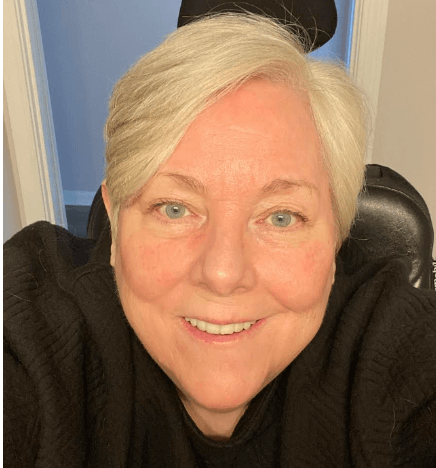
When Christine Griffin (photo, right) started her tenure as a commissioner at the Equal Employment Opportunity Commission in 2005, she had a long list of things she wanted to work on. Despite her previous work with the Boston Disability Law Center, the Federal employment of people with disabilities was not at the top of that list.

That quickly changed.

“After learning early on that people with disabilities, and more specifically, targeted disabilities were not represented in the Federal workforce in any meaningful numbers, I decided that should be my focus,” Griffin said. “I always believed that government should live up to the ideals that it was telling everyone else to live up to.”

During her time at EEOC, Griffin and a team of attorneys that included Steve Zanowic and Jo Linda Johnson, developed the LEAD Initiative (Leadership for Employment of Americans with Disabilities) with two goals:

  • Increase awareness of the issue.
  • Increase the number of people with targeted disabilities working for the Federal government.

LEAD laid the groundwork, and numbers have steadily risen. The overall participation rate of individuals with targeted disabilities increased from 1.05 percent in 2003 to 1.80 percent in 2019. Meanwhile, 12 of 28 independent agencies, 11 out of 17 cabinet departments, and 34 out of 98 subcomponents of cabinet departments are meeting the 2 percent goal. In 2016, only 10 independent agencies and subcomponents reached that goal.

Griffin took that work to the Office of Personnel Management five years later when she became the agency’s Deputy Director. Her most memorable moment, she said, was sitting next to President Obama the day he signed Executive Order 13548, aimed at increasing the employment of individuals with disabilities.

“I think it has taken a long time,” Griffin said, “but the work we did at EEOC to create awareness coupled with the Executive Order from President Obama made Federal agencies more accountable. What is measured is treasured and having someone at the highest level ask for those measurements through EEOC and OPM makes a difference.”

At OPM, Griffin’s team created the first government-wide Diversity and Inclusion Work Group that led to the development of the first government-wide diversity and inclusion strategic plan. And there was another first. Griffin and then EEOC attorney Veronica Villalobos set up OPM’s Diversity and Inclusion Office at OPM. [Editor’s note: Another member of that team was J. Bruce Stewart, who will be presenting The Power of an Inclusive Mentality on November 8.]

Griffin is currently senior executive search consultant at Bender Consulting Services, Inc.

DG: What impact has the pandemic had on reasonable accommodation in the workplace?

CG: The most beneficial impact that the pandemic had was to prove to employers that employees can work from home and be productive. With the amazing technology we have access to, there are very few jobs that can’t be done remotely. I think that came as a shock to many who always thought working from home was a boondoggle. I believe that this will prove to continue to have a significant impact on the reasonable accommodation requests to work from home for people with disabilities. This request will be difficult for employers to deny going forward and hopefully difficult for judges to uphold those reasonable accommodation denials, since even they learned how to work remotely.

DG: Why is it important to revisit existing reasonable accommodations — and how often should that be done?

CG: It is important to revisit reasonable accommodations because of the rapid advances in technology that allow more people to enter and remain in the workforce. I can’t think of one disability that would prevent someone from becoming employed. We don’t need our limbs and senses for most jobs and if we think differently, that is usually a plus for employers. I think an annual review of accommodations would be useful for the employer and employees alike. Just an annual check in with an employee to see how the accommodation is working and if there is something that could be changed, tweaked, etc., to make the employee’s and the employer’s experience better.

DG: What should agencies be doing (or doing better) when recruiting employees with disabilities?

CG: The first thing agencies must do is establish a plan to increase the hiring of people with disabilities that is endorsed at the highest level. Schedule A makes it so easy for Federal agencies to hire people with disabilities without going through a lengthy competitive process. When I was at OPM, we developed the Shared List – a list of people with disabilities who were Schedule A eligible and ready to go to work. This list was populated by Bender Consulting, who found individuals with disabilities with the skills requested by the CHCOs. Agencies had access to the list and could search for the person with the skills they needed. OPM stopped funding that list, and Federal agency personnel are still calling and asking where it is. For now, agencies can contract with Joyce Bender, CEO of Bender Consulting, to help them find the candidates with the skills they need. Bender has been working with agencies for more than 20 years to help them recruit and hire individuals with disabilities.

DG: On the flip side, individuals with targeted disabilities are leaving the government at twice the rate as those without disabilities. Where do you think agencies are failing?

CG: I think some Federal agencies have failed to create the inclusiveness necessary to keep any employees who bring diversity to the workplace. People leave a workplace when they don’t feel valued, and that includes employees with disabilities. We used to say that they will hire you because you’re different (check off a box) and get rid of you for not being the same. I also think that people with disabilities in the Federal government don’t enjoy the same opportunities for advancement. If they can seek that advancement elsewhere, if they feel more valued elsewhere, they will leave.

[Editor’s note: Register for Reasonable Accommodation: Meeting Post-pandemic Challenges in Your Agency on November 17, starting at 1 pm ET.] [email protected]

By Dan Gephart, September 12, 2022

Only six percent of American workers who have been teleworking since the pandemic began want to return to the physical workplace, according to a recent poll.
You know that there are more than a handful of people at your agency who feel the same way. What if one of those employees just never came back to the physical workplace and just kept working from home. What would you do?

Let me spell it out for you.

A-W-O-L.

But they’re still working, you say. Yes, but are they working in the location where they were told to report? No? Well then it looks like you have a clear-cut case of Absence Without Leave.

As FELTG President Deb Hopkins pointed out during the recent training session What You Think You Know About AWOL is Probably Wrong, there are foundational MSPB cases going back to the 1980s on AWOL. The newly quorumed MSPB has already decided AWOL cases. And there are so many AWOL cases in between that you should have little problem finding one with a similar fact pattern to yours. As Deb said during the training, “a lot of employees have gone AWOL over the last 40 years.”

Are you still hesitant to charge AWOL for an employee who works remotely despite orders to return to the physical workspace?  Well, the MSPB has ruled that an employee doesn’t even need to be “absent from the work site to be found AWOL.” Buchanan v. Dep’t. of Energy, 247 F.3d 1333 (2001).

There are several examples of this, including the employee successfully charged with AWOL for conducting personal business while on duty (Mitchell v. DoD, 22 MSPR 271 (1984)) and the employee removed via AWOL for sleeping on the job. Golden v. USPS, 60 MSPR 268, 273 (1994).

And then you have Mr. Lewis. The Bureau of Engraving and Printing employee, still seemingly dismayed by a change of shifts two years previously, refused to obey his supervisor’s order. He was told that he only should return to work only if he was “willing and able to report for duty.”

Lewis took his supervisor’s directive to mean that he was on “approved leave,” and could take his time to determine if he wanted to continue working. The agency disagreed with his assessment and charged him with AWOL. The MSPB agreed with the agency. Lewis v. Bureau of Engraving and Printing, 29 MSPR 447 (1985).

If you missed Deb’s recent session, join us for Feds Gone AWOL: Understanding the Charge and Applying it Correctly, which will be held on October 6 from 1-2 pm ET, and get yourself up to speed on this important charge. [email protected]

By Dan Gephart, August 16, 2022

If you’re a Federal supervisor and you see your name in the Washington Post, chances are it’s not going to be a positive experience. And that was certainly the case for the high-ranking senior government official whose demeanor and leadership were questioned by anonymous staff members in a story last month.

That this personnel investigation was dragged onto a public website that generates 70 million unique views each month doesn’t look good for anyone involved. I will not weigh in on any of the specific details of this story, nor make any judgments. But I will share three important lessons we can take away from the article.

1. A disability may appear to be something else. Before you rush to judgment on an employee’s behavior, be aware that some disabilities exhibit themselves in ways you wouldn’t expect.

More than 37 million Americans, a whopping 11.9 percent of the population, had some form of diabetes in 2019, according to the American Diabetes Association. That’s a lot of people. When blood glucose levels become too high or too low, a diabetic individual’s mental status can become impaired. It could lead to slurred speech and moodiness that mimic intoxicated behavior. It may seem obvious to you that an employee is drunk, but that may not be the case.

When an employee shows up to work looking disheveled, acting irritably, and appearing sleep-deprived, you may think she was out on a bender. She could have anxiety, post-traumatic stress disorder, or may be undergoing a mental health crisis.

Are you supposed to somehow figure this out on the fly? No. Are you supposed to ask the employee if he has a disability? Heck no! The law prohibits your agency from asking questions likely to elicit information about a disability at this stage. General questions such as, “Are you feeling okay?” are usually appropriate, as is telling the employee: “Hey, did you know we have a Reasonable Accommodation Coordinator?  I’ll email you her contact information just in case you’d like to talk to her.”

If the employee is indeed drunk, remember that you can and should discipline the employee – even if the employee has a disability such as alcoholism.

2. You should hold all employees accountable, even if they may have a disability. Let’s say an employee arrives late for a couple of times in one week. Could a change in medication or a hidden disability be the cause? It’s possible. But that doesn’t mean you ignore what’s happening. Yes, you can point the employee to the RA Coordinator. Then document the incidents using your 75-cent tool (prices may change due to inflation). If the misconduct or poor performance continues, take the appropriate action

3. Reasonable accommodations are not a one-and-done thing. What if the employee had previously informed you of his disability and had already received an accommodation? And now, out of the blue, the performance or conduct worsens.

This is a good reminder that reasonable accommodations are not lifetime appointments. It’s good practice to reassess the accommodation if an employee appears unable to perform the essential functions of their job. Medications change (as do their side effects), and conditions improve, worsen, or simply change over time. Most reasonable accommodations are no- or low-tech. But if you’re providing a high-tech accommodation, you need to ensure it’s compliant with current and changing technology needs and be aware if there’s a new alternative product that would be effective.

The pandemic changed us all. If your employees are returning to the physical workplace after more than two-plus years, now may be the time to re-evaluate the effectiveness of their reasonable accommodations. It’s one of those rare things you can do that is a true win-win for everyone. [email protected]

[Editor’s note: Join Attorney Katherine Atkinson for the session Revisiting Existing Reasonable Accommodations, one of the 11 sessions that make up FELTG’s Annual Federal Workplace 2022: Accountability, Challenges & Trends August 29 – September 1.]

By Dan Gephart, August 8, 2022

For five-plus years, we at FELTG and others have referred to the then-growing backlog of cases at the Merit Systems Protection Board with dread. So the enthusiasm with which MSPB Acting Chair Cathy Harris is approaching her new position, as evidenced by her appearance on the radio and here, is surprising. And refreshing. And very hopeful.

The Acting Chair said she was “honored and humbled to be nominated” by President Biden. “I am committed to doing the very best I can to protect the merit systems and achieve justice,” she told us. “What an incredible opportunity!”

Harris says “opportunity.” Others see challenge, to put it lightly. The new Board inherited a 3,500-case backlog, at which they’ve been dutifully whittling away. But there are some anxious employees and agencies, who have been waiting a long time for resolution of their cases. And new cases are coming in every day.

DG: What would you say to someone who has a Petition for Review and is wondering when the Board is going to get to it?

CH: We are diligently working to get to your case. The good news is that the career staff has done the work to prepare the Board members to be able to make efficient and thoughtful decisions, so we are not starting from scratch. That said, it is going to take time for us to consider and get to all the decisions that are awaiting our review. We don’t yet have an estimate as to when we will be able to project when we will get through the case inventory but am hoping we should be able to do that before too long.

DG: What are your thoughts about Federal Circuit decisions on issues that the Board didn’t have an opportunity to address (given the lack of a quorum) and their impact on future MSPB decisions?

CH: Appellants may take their cases directly to the Federal Circuit after a decision from an administrative judge. During the lack of a quorum, this enabled appellants to get appellate review of their cases. But appellants have this right even in the presence of a quorum, so the Board is accustomed to situations where it may not have had an opportunity to opine on certain issues.

DG: Is there any extra effort given to encourage settlement on backlogged cases?

CH: Yes. We are actively exploring ways in which we can identify cases that might be appropriate for settlement. We encourage parties to contact the PFR Settlement Program if they feel their case would be appropriate for mediation at this juncture. As time has passed and circumstances have changed, we understand it may be easier for parties to achieve a resolution now. Interested parties may contact the PFR Settlement Program at (800) 209-8960.

DG: Is the Board considering shortening decisions to speed up the backlog reduction?

CH: Yes. The Board will be issuing shorter decisions where appropriate.

DG: Is there a mechanism in place for giving feedback to administrative judges regarding the quality of their decisions?

CH: Yes. Internally, administrative judges receive instructive guidance through Board decisions. Further, pursuant to MSPB’s Judges’ Handbook, Chapter 12, Chief Administrative Judges review initial decisions written by administrative judges below the GS-15 grade level prior to issuance.

Chief Administrative Judges also review initial decisions for complex cases written by administrative judges at the GS-15 grade level prior to issuance. Other initial decisions are reviewed after issuance. Chief Administrative Judges and Regional Directors provide direct feedback to administrative judges regarding whether initial decisions sufficiently adhered to authorities such as the Judges’ Handbook, MSPB regulations, and relevant statutes and case law.

My message to all federal employees, not just supervisors, is: The Board is fully back, and we are committed to protecting the merit systems. Employees and supervisors would do well to educate themselves as to merit system principles and prohibited personnel practices. There is more information on these topics on our website.

[Editor’s note: See our previous interviews with Member Tristan Levitt and then-Acting-Chair Raymond Limon, and register for the MSPB and EEOC Case Law Update on August 31 from 3-4:15 pm ET, part of FELTG’s annual Federal Workplace 2022: Accountability, Challenges and Trends event, or MSPB Law Week September 12-16.] [email protected]

By Dan Gephart, July 18, 2022

Folks, it ain’t over yet.  Forget the crowds of unmasked frolickers you’ve seen on your summer adventures or the lack of above-the-fold headlines about death rates or hospitalizations. COVID is still very real. And there’s a chance we are in for some hard times ahead. How hard those times will be, though, is still not certain.

The BA.5, the most dominant variation of omicron, has residents across Europe and China bracing for a widespread wave and potential lockdowns. Here in the United States, however, we don’t really know what we’re dealing with. Some far-reaching areas of the web will have you believe the BA.5 variant is more contagious than strep throat at a high school party. But ask others about BA.5 and they might think you’re talking about a new boy band.

Since most people take COVID tests at home and others don’t test at all, the numbers being reported each day could be woefully underestimated. Or not. The mixture of conflicting information and COVID fatigue makes it hard to get an accurate sense of the situation – and to get people to care about it.

Regardless of its level of transmissibility, the BA.5 variant is poised to hamper efforts at bringing employees back to physical offices, endanger those who already work in those offices, and diminish agency productivity. Serious repercussions of BA.5 could happen in the next couple weeks. Or picture this: A COVID wave running through your agency as you and your colleagues are trying to put a wrap on the fiscal year. What can you do?

First, take care of yourself. Your best tools are still to avoid crowds, mask up when necessary, and get vaccinated.

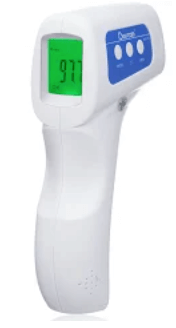
As for your agency, you may decide to screen employees for COVID. Some agencies have temperature screening plans in place. As the EEOC notes in its guidance, measuring an employee’s body temperature is a medical examination, which is not permissible under the Rehabilitation Act, with a few exceptions. Because “the CDC and state/local health authorities have acknowledged community spread of COVID-19 and issued attendant precautions, employers may measure employees’ body temperature.”

But temperature screens are not that useful. An ongoing UK study found fewer than one-third of the people who self-reported COVID symptoms included fever among them.

Requiring employees to take a COVID test before they return to the workplace is an option, although this is also tricky. The EEOC updated its guidance on COVID tests just this month. Like temperature screens, COVID tests are considered a medical examination, yet they can be used in certain situations.

The EEOC’s guidance:

A COVID-19 viral test is a medical examination within the meaning of the ADA. Therefore, if an employer implements screening protocols that include COVID-19 viral testing, the ADA requires that any mandatory medical test of employees be “job-related and consistent with business necessity.” Employer use of a COVID-19 viral test to screen employees who are or will be in the workplace will meet the “business necessity” standard when it is consistent with guidance from Centers for Disease Control and Prevention (CDC), Food and Drug Administration (FDA), and/or state/local public health authorities that is current at the time of testing. Be aware that CDC and other public health authorities periodically update and revise their recommendations about COVID-19 testing, and FDA may revise its guidance or emergency use authorizations, based on new information and changing conditions.

When assessing whether you meet the “business necessity standard” to administer COVID tests, consider the following:

  • The level of community transmission.
  • The vaccination status of employees.
  • The degree to which breakthrough infections are possible for employees who are up to date on vaccinations.
  • The ease of transmissibility of the current variants.
  • The possible severity of illness from the current variant.
  • How much contact employees have with each other in the workplace.
  • Potential impact on operations if an employee enters the workplace with COVID.

That’s a lot of information. If you want to keep your employees healthy and productive, keep an eye on guidance from the CDC and EEOC. That’s what we’re doing at FELTG. Every session we offer provides the most up-to-date information available. These upcoming events can help make your return-to-workplace transitions smoother:

[email protected]

By Dan Gephart, July 12, 2022

As Federal agencies work to implement the President’s Executive Orders on diversity and inclusion, navigate requirements to offer relevant training, and seek to hire chief diversity officers, I can’t help but think of one person in particular: Dr. J. Bruce Stewart.

Stewart was responsible for coordinating implementation of President Barack Obama’s Executive Order on Diversity and Inclusion. At that time, Stewart was “Deputy Director, Training Compliance and Strategic Initiatives, Office of Diversity and Inclusion” at the Office of Personnel Management. His impact there was as deep as his title was long. It included several groundbreaking initiatives and the first-ever government-wide diversity and inclusion strategic plan, which came with a 47-page guidance document.

But I remember most Stewart’s role as the chief architect of The New IQ – a tool for measuring inclusion. The New IQ stands for the New Inclusion Quotient. It consists of the answers to 20 specific questions, identified through a rigorous factor analysis trial, on OPM’s Federal Employee Viewpoint Survey.

I asked Stewart how he would assess the current Federal workplace’s New IQ.

“I think it’s getting much better,” he said. “The New IQ is built upon the concept that individual behaviors, repeated over time, form the habits that create essential building blocks of an inclusive environment. These behaviors can be learned, practiced, and developed into habits of inclusiveness and subsequently improve the inclusive intelligence of organizational members. Basically, the New IQ argues that a type of intelligence called ‘inclusive intelligence’ is the real differentiating factor that distinguished good teams from great ones. And, in a general sense, inclusive intelligence is a person’s ability to bring out the best in other team or group members. Conversely, the Old IQ or individual intelligence measures how smart you are as an individual. The New IQ emphasizes how smart you make your team.”

Although it’s not the focus, the New IQ is covered in Stewart’s book – The Click Code: Why Some Teams Click and Others Don’t, which is getting its fair share of praise. He will also present a session on “The Power of an Inclusive Mentality” during FELTG’s Federal Workplace 2022: Accountability, Challenges, and Trends August 29 – September 1. ACT is an annual FELTG event offering short, engaging, and guidance-filled training sessions focused on helping you manage the employment challenges that are new, complicated, and critical to you and your agency’s success.

Stewart arrived at OPM after serving 23 years in the Air Force. He retired as Lt. Colonel. His last assignment was as the Air National Guard’s Director of Cultural Diversity Transformation. Here is some of our recent conversation:

DG: In The Click Code, you discuss psychological safety. Can you define that term and tell me why it’s important for 1) team success and 2) agency efforts to improve DEIA?

BS: Sure. Psychological safety is the ability of a person to feel safe in speaking up at work or in the community, especially if that person has a different perspective or viewpoint. Do they feel free from retaliation or retribution if they speak up with a dissenting opinion? Why the concept of psychological safety is so important for team and DEIA success is because the ability of people to honestly share their viewpoints or beliefs without fear is a concept that fuels both team and DEIA success.

DG: Everyone seems to have different definitions of diversity and/or inclusion. How do you define the terms?

BS: Diversity is simply variations within groups. In other words, you can only be diverse in relation to someone or some other group. Inclusion is the perception that a person feels a sense of belonging and is valued for their unique strengths. People feel included when they feel welcome and believe their voice is being heard. This definition is based upon what is known as Brewer’s Optimal Distinctiveness Theory, which argues that human beings have core needs — the need to belong and the need to be valued as an individual.

DG: When pursuing DEIA, how does an agency get buy-in from reluctant staff, especially when anything related to diversity is being challenged as “PC culture,” “wokeism,” and “CRT?”

BS: Well, the first thing is not to call anyone a racist, bigot, or imply they are not very bright. Instead, different strands of research have shown that people are influenced to think differently and change their behaviors by repeated conversations with people already within their social circles. Most people change their belief systems and behaviors not by what someone says on television or on social media, but instead are strongly influenced by the social identity group they are a part of. Anything taken to an extreme, including DEIA, can become problematic and non-productive. Everything is relative, but from my perspective the most urgent challenge to our democracy, according to the Director of the FBI, is the growing influence of white nationalists advocating a white supremacist ideology.

DG: Per Executive Order, agencies are hiring Chief Diversity and Inclusion Officers. If you could give the individuals who hold this title only one piece of advice, what would that be?

BS: That fundamentally your primary focus should be to understand the science of change by applying insights from network science to find the right mix of social capital. In tomorrow’s world, the deciding factor won’t be the color of one’s skin but the diversity of their connections within a network of relationships.

Hear more from Stewart during his session “The Power of an Inclusive Mentality” on Wednesday, August 31 from 10:30 – 11:45 am ET. Register now for this and other sessions of FELTG’s Federal Workplace 2022: Accountability, Challenges, and Trends. Early bird pricing, daily and full event All Access discounts are available. [email protected]

By Dan Gephart, June 21, 2022

Good news is at a premium these days, so pardon me for still regaling in last month’s announcement from the EEOC about Federal employees with targeted disabilities. Back in a previous life, I worked with then-EEOC Commissioner Christine Griffin on a series of columns she wrote about improving participation rates for employees with disabilities, particularly those with targeted disabilities. I kept a close eye on reports that showed participation numbers slowly ticking up. However, according to a recent EEOC report that looks at a longer span of time, those rates are improving at a much better pace.
Here’s the information straight out of the EEOC’s Annual Report on the Federal Workforce for 2019:

  • The overall participation rate of individuals with targeted disabilities increased from 1.05 percent in 2003 to 1.80 percent in 2019. This was driven by increases in the participation rates of individuals with serious difficulty hearing, serious difficulty seeing, and significant psychiatric disorders.
  • More agencies are meeting the 2 percent goal for the participation rate of individuals with targeted disabilities. Twelve of 28 independent agencies, 11 out of 17 cabinet departments, and 34 out of 98 subcomponents of cabinet departments meeting the 2 percent goal. In 2016, only 10 independent agencies and subcomponents reached that goal.

Targeted disabilities include blindness, deafness, partial and full paralysis, missing extremities, dwarfism, epilepsy, intellectual disabilities, and psychiatric disabilities. Individuals with these disabilities typically have the greatest difficulty finding employment, according to the EEOC.

There’s more good news: The percentage of Federal workers with disabilities (not just targeted) has increased more than 8 percent since 2014. Federal workers will disabilities now make up just under 9.5 percent of the workplace, according to the latest EEOC data.

Unfortunately, there is also bad news via the EEOC’s recent report Status of Workers with Disabilities in the Federal Workplace.

People with disabilities are still underrepresented in Federal sector leadership. Among persons with targeted disabilities, 10.7 percent are in leadership positions and 89.3 percent are in non-leadership positions. That compares to 16.4 of people without disabilities in leadership positions, and 85.6 percent of people without disabilities in non-leadership positions.

Also, employees with targeted disabilities are involuntarily leaving the Federal workplace at more than twice the rate of people without disabilities. Individuals with any disability were 53 percent more likely to involuntarily leave than those without disabilities.

The report also reveals that over a five-year period, Federal sector physical disability-based complaints increased by 22 percent. Mental disability-based complaints increased by a whopping 72 percent. These statistics outpaced the overall increase in Federal sector EEO complaints.

Kudos for those hiring, retaining, and accommodating employees with disabilities.   For everyone else, it’s beyond time to get on board.  Here are three suggestions to help you do that:

1 – Take advantage of Schedule A authority. Do you have a hiring need? Are you already dreading the long and complicated road to filling the open position? Consider Schedule A. It allows you hire a qualified individual with a disability without posting a job announcement or going through the certificate process.

And the process is simple. Contact the correct person at your agency who handles Schedule A. (It could be an HR professional, a disability program manager, an EEO specialist, or a special placement program coordinator.) Explain the competencies you’re looking for, along with the essential and non-essential functions of the job. You will soon receive several resumes of qualified individuals who have the prerequisite skills and are looking for an employment opportunity.

For more guidance, read through the EEOC publication The ABCs of Schedule A Tips for Hiring Managers on Using the Schedule A Appointing Authority.

2 – Prepare yourselves for a huge increase in reasonable accommodation requests. Yes, we know you have a reasonable accommodation process in place. But when is the last time you seriously reviewed its effectiveness, and how well your managers are following it? And are you ready to handle the huge influx of accommodation requests that has already started to happen and will only increase as more employees return to the physical workplace?

Before you can tackle your processes, you need to know the law. Join us for the five-part Reasonable Accommodation in the Federal Workplace webinar series, especially the first session on July 21 that takes a look at Reasonable Accommodation Framework: Disability Accommodation Overview and Analysis.

You’ll learn about important information such as:

  • Understanding what “qualified individual” means.
  • How to properly identify a reasonable accommodation request.
  • When to deny a reasonable accommodation request.
  • And much more.

3 – Make sure supervisors understand the interactive process. An employee does not have to specifically state “I want a reasonable accommodation” when making a request. Also, the RA request does not have to come from the employee. It could from a coworker, family member. Heck, it could even come from a customer. And this is only the first part of the “interactive process.”

You also need to know the essential functions of the job, hold discussions with the employee – that means listen to the employee – and then get creative. Just because a supervisor knows the “best way” to complete a job doesn’t necessarily mean that’s the only way. And, likewise, the employee isn’t guaranteed to get his/her/their accommodation of choice if there is another accommodation that is just as effective. The interactive process is a team effort, and one that requires supervisors to be on top of their game. We’ll tackle the Importance of the Interactive Process in the second part of the Reasonable Accommodation in the Federal Workplace webinar series on July 28. [email protected]

By Dan Gephart, June 6, 2022

Tristan Leavitt, Member, Merit Systems Protection Board

When And Now a Word With … last talked with Tristan Leavitt, the word “corona” evoked visions of a weak mass-produced beer not a virus that would eventually take the lives of more than a million Americans. And the Merit Systems Protection Board was in the seventh month of sitting member-less, following the expiration of former Chair Mark Robbins’ term.

As then-General Counsel of the MSPB, Leavitt had assumed the responsibilities for the executive and administrative functions usually vested in the Chair. Over the next couple of years, Leavitt and a dedicated group of agency staff steered the MSPB through its most challenging period.

Three months ago, Leavitt and Raymond Limon were confirmed and sworn in as Members, ensuring a quorum for the first time in more than five years. And now, the backlog of Petitions for Review that we all watched steadily are being addressed. New MSPB Chair Cathy Harris was finally confirmed by the Senate late last month, so the MSPB is back at full strength for the first time in over half a decade.

Like Vice Chair Limon recently, Leavitt very graciously took time to answer our questions, giving us a peek into the new Board’s approach.

 DG: Are you satisfied with the current pace with which you and Acting Chair Limon are tackling the backlog of cases?

TL: I think we’ve made a decent start.  Both he and I have fantastic staff, and I’ve really appreciated how smoothly our two offices have been able to work together.  That said, no matter how fast we move, we recognize that the backlog represents over 3,000 appellants and their agencies awaiting finality, so I doubt we’ll ever shake the sense of urgency that we look for ways to be more efficient.

DG: It appears you are prioritizing whistleblower cases. Is that so and why?

TL: Way back in October 2019 I mentioned in this same forum that MSPB’s career staff had drawn up plans for dealing with the backlog.  Primarily, that consisted of identifying a “priority group” of 300 cases as a first group for an incoming Board to address.  The group included a mix of all types of cases: easy cases to help new Board members acclimatize, cases dismissed as settled, precedential cases on which a number of other cases hinge, extremely old cases, cases potentially involving large amounts of backpay, etc.  When Ray and I were confirmed, we adopted the recommendation of staff and began working through the priority group of cases.  Given that whistleblower reprisal allegations are raised in some 25 percent of all cases before the Board, it’s not surprising that the group has included a number of whistleblower cases, some of them precedential.

DG: Are you planning to prioritize any other types of cases? 

TL: Since the creation of the first priority group, MSPB staff have developed second and third priority groups that are also approximately 300 cases each.  Beyond those groups, we haven’t yet developed a comprehensive strategy for how we intend to deal with the rest of the approximately 2,700 cases in the backlog.  To some extent, I would say that’s because we’ve been in an acclimation period, particularly since Ray is new to MSPB, and to some extent it’s probably also because it’s unclear how close we might be to the confirmation of a third Board member. Nevertheless, by the time we’ve worked through the priority groups there will have to be decisions made about where to go next in the backlog, and I would imagine we’d be well equipped at that point to develop a strategy.

DG: You’ve decided to keep the non-precedential cases and while most are 1-2 pages, others are much longer. Can you explain your approach to NP cases? 

TL: As Ray noted here recently, MSPB staff have already drafted recommended decisions for approximately 3,400 of the 3,600-case backlog, and those were generally drafted under the procedures in use when last the Board had a quorum.  While Ray and I have exchanged proposed edits with one another in cases or sent a handful back to the career staff for particularly involved revisions, I think it’s fair to say that thus far we’ve mostly just worked with the case formats and lengths presented to us by the career staff.  As a general matter, I would say the most abbreviated non-precedential orders tend to come in cases where it seems very clear to us there is no jurisdiction or where the administrative judge adequately addressed in the initial decision all relevant issues.

DG: Why has the board talked about likely resuming reissuing short form decisions again?

TL: There has been discussion about how much time could be saved by reverting to true short form decisions, particularly for the types of cases I mentioned above that are only receiving abbreviated orders anyway.  On the other hand, drafting a very brief opinion doesn’t seem to be particularly arduous, especially since the shortest already tend to simply state the issue in question and articulate the Board’s standard for granting petitions for review.  As I mentioned before, there are a number of decisions to be made that we’ve postponed until we could get our feet wet by working through the priority groups, and my guess would be that this is one of those issues.  If we did decide to revert to short form decisions, I’d imagine it would be implemented with newer cases coming in for which recommended decisions haven’t yet been drafted.

DG: There was a lot of focus and attention on that backlog of cases, but how else has the presence of a quorum positively impacted the agency? 

TL: The restoration of a quorum is certainly beneficial to agency morale, as all of MSPB’s committed staff are eager to fulfill the full scope of the agency’s important mission.  The Office of Policy and Evaluation’s research agenda can now be finalized, and the full version of its studies issued moving forward.  MSPB can also update its regulations, which is long overdue in some instances.  Finally, while it only requires one Board member and not a full quorum, having gone from no Board members to two also reopens the door to issuing stays requested by the Office of Special Counsel in prohibited personnel practice cases.

DG: What is the status of the agency’s plans for returning employees to the physical workplace?

TL: I largely haven’t been involved on this topic since handing agency head responsibilities over to Ray. However, as far as I’m aware most employees have resumed reentering the workplace at least some days of the week.

Leavitt noted that even pre-pandemic, the MSPB had a relatively high telework rate compared to other agencies. [email protected]

[Editor’s note: How is the Board ruling in these decisions? Join FELTG President Deborah Hopkins for the two-hour virtual training Back on Board: Keeping up With the New MSPB on July 20, starting at 1 pm ET.]

By Dan Gephart, May 16, 2022

Have you ever had an employee challenge your order or refuse an assignment? Has an employee ever replied to an order with the question: What gives you the right to make me do this?

Regarding the latter, the answer is simple — 5 USC 301-302. Here’s what it says:

“The head of an Executive department or military department may prescribe regulations for the government of his department, the conduct of its employees, the distribution and performance of its business … and to [D]elegate to subordinate officials the authority vested in him … by law to take final action on matters pertaining to the employment, direction, and general administration of personnel under his agency.”

The willful and intentional refusal to obey an authorized order of a superior that the superior is entitled to have obeyed is called insubordination. With employees returning to the physical workplace and the vaccine mandate kicking back in at the end of the month, there’s a good chance you will come face-to-face with situations that look like insubordination in the upcoming weeks. For example, maybe you’ll have:

  • An employee who will not get vaccinated.
  • An employee who will not provide proof of vaccination.
  • An employee who won’t wear a mask where required, or won’t follow other safety protocols.

Or here’s another likely possibility: An employee wants to remain in telework status, and continues to stall the process, by not responding to questions.

These are all instances of misconduct. But is it insubordination? Knowing this in advance is critical to whether any action you take will succeed if challenged.

In a recent class of Insubordinate Employees? Don’t Mess With the Wrong Elements, FELTG President Deborah Hopkins explained what it takes for insubordinate charges to succeed, and she shared some alternative charges that may more appropriate. [Want to bring this 60-minute training to your agency? Contact me or send an email to [email protected].]

The important question you need to ask when faced with insubordinate-like actions is this: Is it a failure to comply or a refusal? When you charge an employee with insubordination, you must prove intent.

In the following two examples, one agency proved insubordination, and the other didn’t. This first decision is 20 years old, however, the topic is quite relevant.

Refusal to be Vaccinated

The Kilauea, a ship supplying ammunition to an aircraft carrier operating in the western Pacific Ocean, was headed toward Korea, a high-risk area for biological weapons. The Commander of the Military Sealift Command ordered that all members of the crew – civilian and military – receive vaccinations against anthrax.

Two Navy employees refused. The chief mate, their supervisor, ordered them to report to the Medical Services Officer to be vaccinated. Again, they refused to be vaccinated and the chief mate warned that they would be removed if they did not receive the vaccination. A week later, they were “signed off the ship.”

After investigating the employees’ claims that they were entitled to medical waivers, the agency removed both employees for “failure to obey a direct order to receive mandatory injections of an anthrax immunization vaccine.” The decision was later affirmed by the Board and the Federal Circuit, who found the removals neither excessive nor unauthorized.

“The misconduct constituted insubordination, which this court defines as a willful and intentional refusal to obey an authorized order of a superior officer, which the officer is entitled to have obeyed.”

A Change of Heart

Remember, intent is the key. The Navy employees refused to get vaccinated. And they followed through on their commitment. But what if they changed their minds? They certainly had plenty of opportunity to do so.

That wasn’t the case with the employee in Milner v. Department of Justice, 7 MSPR 37 (1997). The DOJ employee was being questioned as a witness in an investigation. She was ordered to turn over documents to the investigator. She initially refused, citing concerns about her colleague’s confidentiality. But she went home, gave it some more thought, and brought in the information the next day.

The agency wasn’t pleased with the delay and removed the employee for insubordination.

It didn’t hold up. The MSPB found the agency failed to prove a “willful and intentional refusal” because she ultimately complied. The agency could have charged the employee with something else, but they struck out with insubordination. [email protected]

By Dan Gephart, April 25, 2022

A key milestone in the Biden Administration’s Diversity, Equity, Inclusion, and Accessibility efforts passed by quietly last month, as the deadline passed for agencies to submit their DEIA strategy plans to the Office of Personnel Management.

With the passing of the deadline, we reached out to OPM Director Kiran Ahuja to ask: Now what?

“OPM will be leading efforts to provide recommendations and technical assistance support to agencies as they implement those plans,” Ahuja said. “We are hoping to see agencies demonstrate a well-coordinated and implemented vision and strategy of DEIA priorities, policies, and practices. The agency should show how it is working in a collaborative effort with leadership and accountability at the highest levels of agencies, cross-agency partnerships, data-driven approaches, transparency, and resource investments to ensure success. Ideally, agencies should be able to show progress in executing their DEIA strategic plans, as well as monitor progress and make appropriate adjustments.”

Director Ahuja took time recently to answer our questions about DEIA efforts, recruitment efforts, and telework.

DG: How does the creation of the Chief Diversity Officer position impact the roles of each agency’s EEO office?

KA: Earlier this year, OPM released guidance encouraging federal agencies to appoint Chief Diversity Officers – or CDOs – who will work with senior leaders and others to elevate DEIA work across their respective agencies, including identifying new sources of talent through engagement with underrepresented communities. This includes, but is not limited to, veterans, people of color, persons with disabilities, older workers, individuals who live in rural communities, LGBTQ+ individuals, first generation professionals, and others who have been denied opportunities. To leverage expertise and maximize impact, we’re also looking at convening a CDO council for engagement across the federal government.

While the Chief Diversity Officer (CDO) and EEO Director each have distinct responsibilities, they are also intended to be complementary. They are each responsible for advising the agency head on matters related to different aspects of DEIA. EEO and CDO communities work together to analyze data to assess progress, evaluate root causes and build evidence on key questions regarding DEIA initiatives.

Federal agencies are being asked to establish Chief Diversity Officers in addition to EEO Directors. The EEO Officer is part of the existing DEIA infrastructure within federal agencies. The DEIA infrastructure generally includes the offices of equal employment opportunity, human resources, budget, human capital, chief data, and information management.

DG: Other than the actual virus, what is the biggest obstacle for agencies implementing re-entry plans?

KA: Throughout the pandemic, more than two million civilian (non-postal) Federal employees have been hard at work, protecting our country, providing critical services, and combatting COVID-19 and its impacts.

We now have the tools in place to allow us to safely increase the work we do in person together. As we come back together in our workplaces, we must build on the innovation and technology that we put to work over the last two years to make us even more efficient, resilient, and effective.

Recently, you’ve likely noticed that public-facing federal government offices have been open for longer hours. There are more in-person appointments available for those who need them, more walk-up services, and more in-person interactions. The federal workforce has made it clear that they are extremely resilient and hardworking, even in the toughest of unprecedented times. The federal government will continue to embrace workplace flexibilities as we enter this new hybrid work transition.

DG: 45 percent of all Federal employees teleworked in 2020 and I imagine it was a similar number in 2021. Is that a reasonable figure in non-pandemic times?

KA: I think it’s important to remember here that a lot of our colleagues continued to work in-person during the pandemic. Many showed up in person for the American people because their specific job is tied to a physical location.

Others adapted quickly to working from home, and what we found is that workplace flexibilities like remote work and telework were key to ensuring mission-critical services continued for the American people. We are also learning that greater telework and remote work makes the federal government a more competitive employer as most sectors embrace workplace flexibilities in post-pandemic work environment.

We are currently in a phased transition into a hybrid work environment that combines some in-office work with some telework. This is all dependent on if the employee’s role is conducive to telework, of course.

Our goal is to couple the efficiency and work-life benefits that telework offers with the important benefits of in-person interaction that have been on hold for so many because of this pandemic, like direct person-to-person interaction and collaboration.

DG: What specifically needs to change for agencies to be able to compete more effectively for top talent – and retain them?

KA: The federal government wins on mission – if you want to see the positive impact of your work on the world around you, there’s no better place to build a career. Where else can you find people curing disease, combatting climate change, and landing rovers on the surface of Mars, all in the same workforce? And when you’re in the business of achieving the unachievable, you need cutting-edge skills, fresh perspectives, and people who are hungry to have an impact.

OPM is doing a number of things to meet that need and help recruit early-career professionals to the federal workforce:

  • We created new hiring rules that allow agencies across the government to hire post-secondary students and recent college graduates for positions that pay up to $75,000. This opens the door to so many people who may not have long resumes to point to, and to people who would face financial hardship if their only option was an unpaid internship.
  • We’re looking into ways to reform long-standing opportunities like the Pathways Program, which offers internships and fellowships, including the prominent Presidential Management Fellowship.
  • And we’re renewing partnerships – and in some cases, forging new ones – with four-year colleges, community colleges, trade schools, and Minority Serving Institutions (MSIs), including Historically Black Colleges and Universities (HBCUs), Hispanic-Serving Institutions (HSIs), Asian American Native American and Pacific Islander-Serving Institutions (AANAPISIs) and schools with large Tribal student populations.

Targeted recruitment — whether early or mid-career talent — and a focus on workplace flexibilities will help us recruit and retain a strong workforce. We see the federal government as the model employer. The federal government is the largest employer in the nation, with well over two million civilian employees working in every state across the country. The policies we set for our workforce and the way we treat our employees matters, and it matters to countless more who are impacted by the example we set. We want every worker in every sector across our economy to see how we treat our employees in the federal government and understand that they deserve nothing less at their workplace, too.

[email protected]